Wardrobe Interior Fittings & Organisers for East Lothian Bedrooms
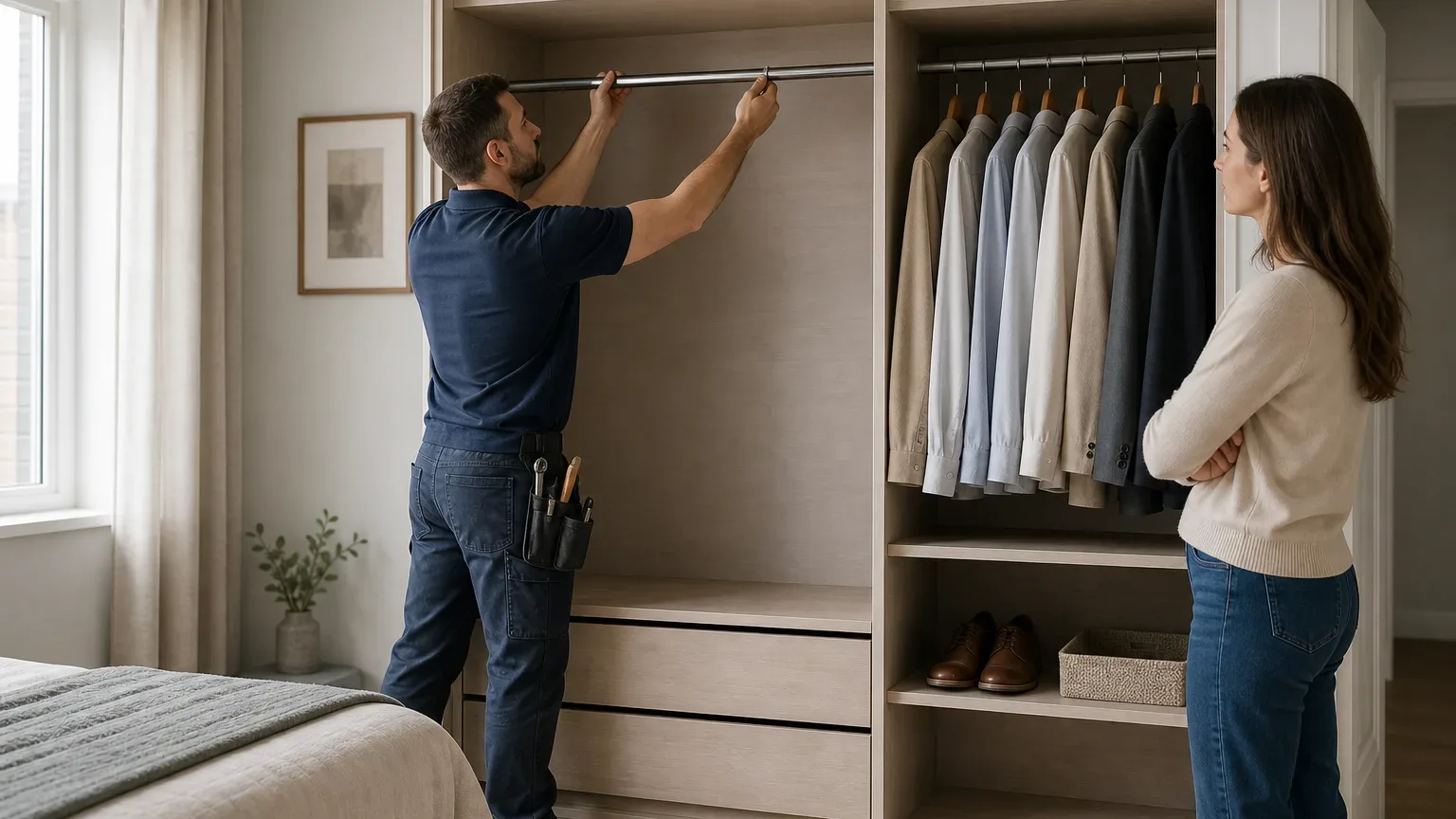
The frame of a fitted wardrobe determines how it looks. The interior fittings determine how well it actually works. Choosing the right rails, shelves, drawers, and accessories before installation begins saves significant cost and frustration later, because retrofitting internal components into a bespoke carcass is rarely straightforward.
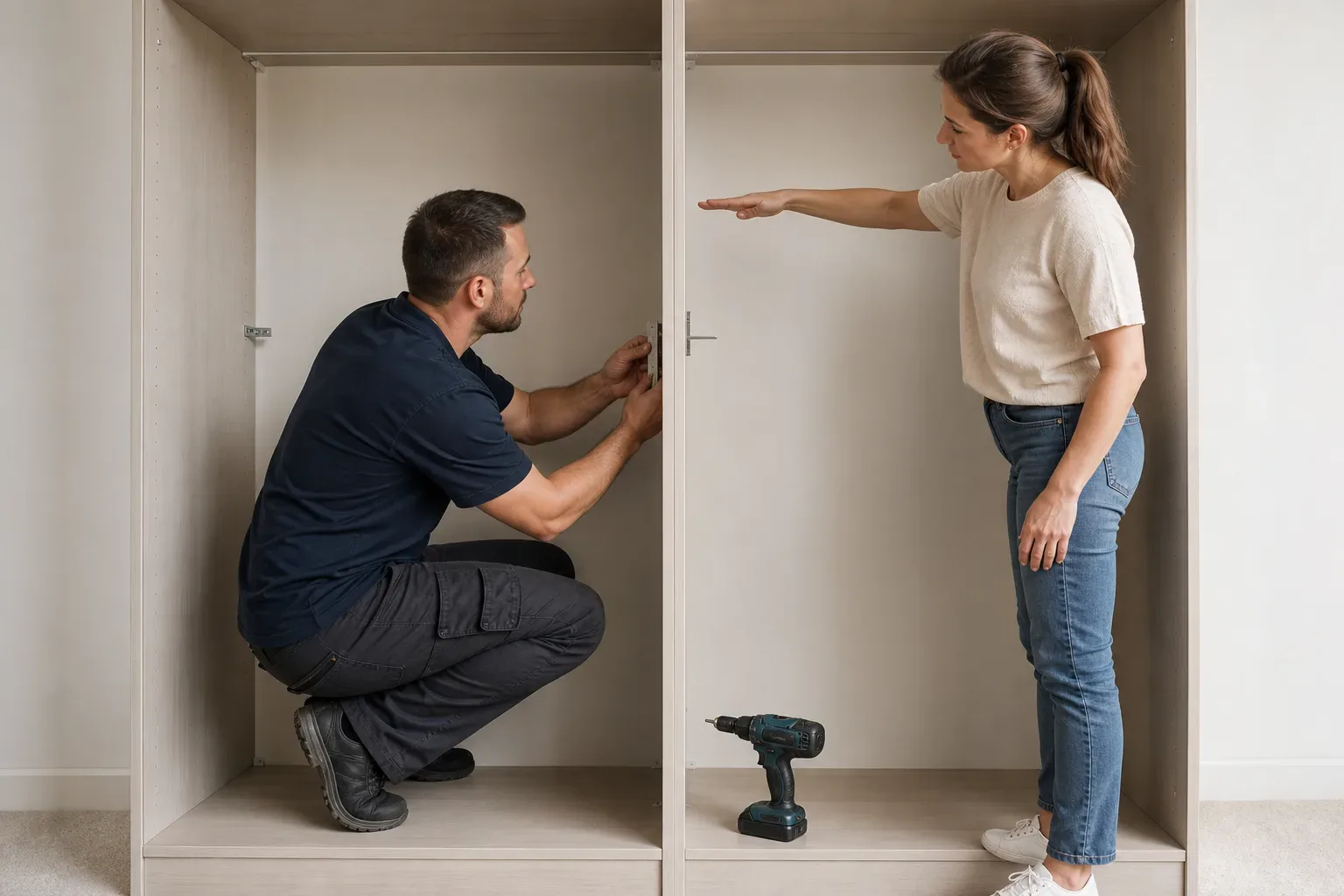
Why Interior Layout Matters More Than Door Style
Most people spend longer choosing a door finish than planning what goes behind it. A handleless slab door in an Farrow & Ball tone looks striking, but if the interior defaults to a single hanging rail and two shelves, the wardrobe will be disorganised within a fortnight. Internal fittings should be driven by a realistic audit of what needs storing: long hanging garments, folded knitwear, shoes, accessories, and anything else currently living on a bedroom chair.
For East Lothian homes, where bedroom sizes vary considerably between Victorian sandstone villas in Haddington and newer builds around Tranent, there is rarely a one-size-fits-all interior plan. A narrow alcove wardrobe in a North Berwick terrace demands different prioritisation than a walk-in installation in a detached property near Dunbar.
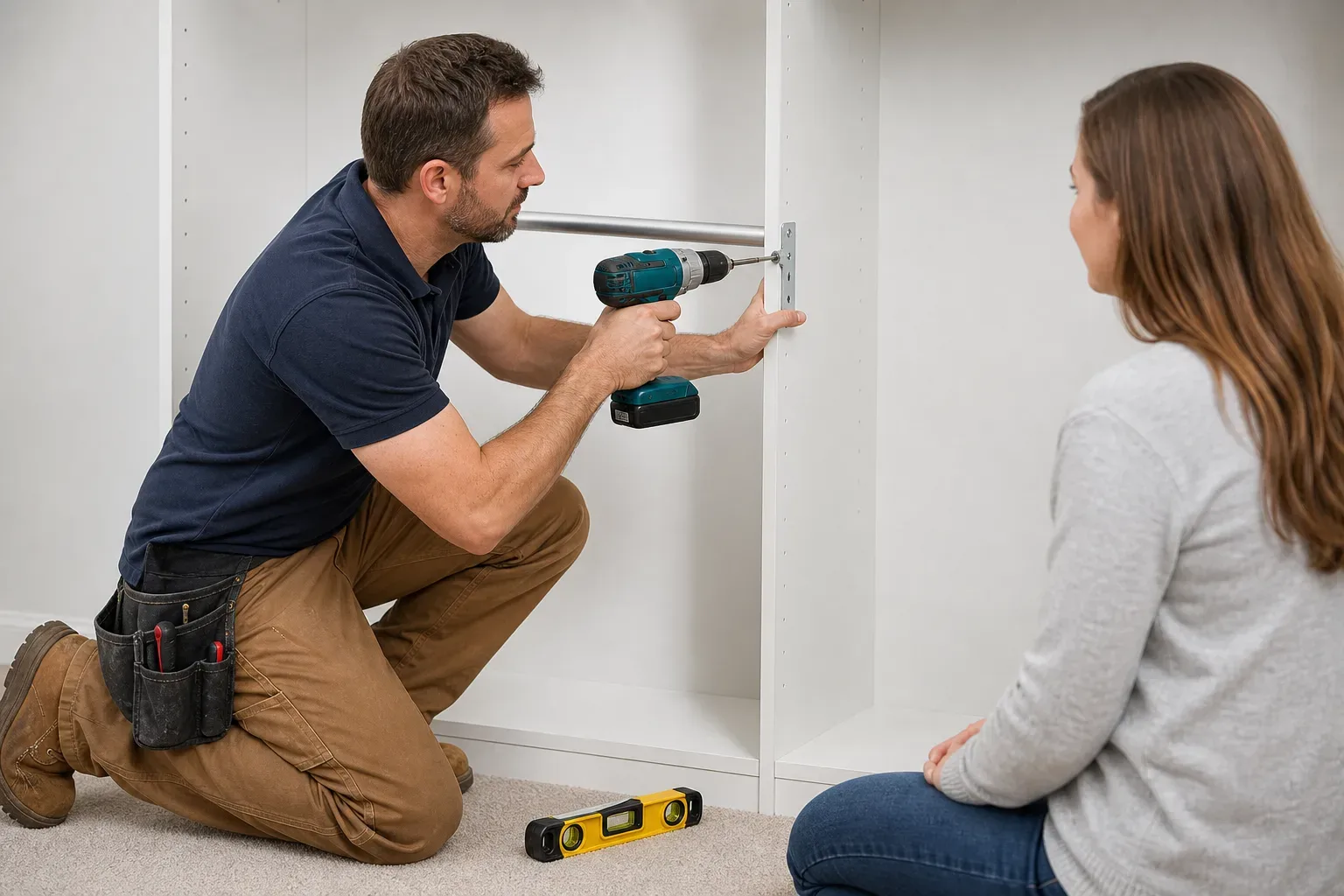
Core Wardrobe Interior Fittings Explained
Hanging Rails
A standard single hanging rail runs the full width of the wardrobe and suits long dresses, coats, and suits. Double hanging, which stacks a short rail above another, roughly doubles hanging capacity within the same footprint and works well for shirts, jackets, and trousers folded over a rail. Oval steel rails are the most common choice in bespoke fitments: they are stronger than round alternatives and allow hangers to slide freely without catching.
Rail depth matters. A minimum of 560 mm front-to-back is required for coat hangers to sit without pressing against the door. Many standard bedrooms in older East Lothian properties fall short of this when an alcove is shallow, so confirming internal depth at the survey stage is essential.
Shelving
Fixed shelves are the most cost-effective internal component, and they carry a surprising load when correctly supported with shelf pins or fixed brackets into 18 mm MDF or solid wood panels. Adjustable shelf systems use a series of drilled holes along internal uprights, letting you reposition shelves as your storage needs change over time.
Shoe shelving is a specific variant worth planning deliberately. A dedicated angled shoe shelf, typically set at 15–20 degrees, stores pairs more compactly than a flat surface. A four-bay wardrobe with dedicated shoe shelving at the base can accommodate 20–30 pairs without stacking.
Drawers
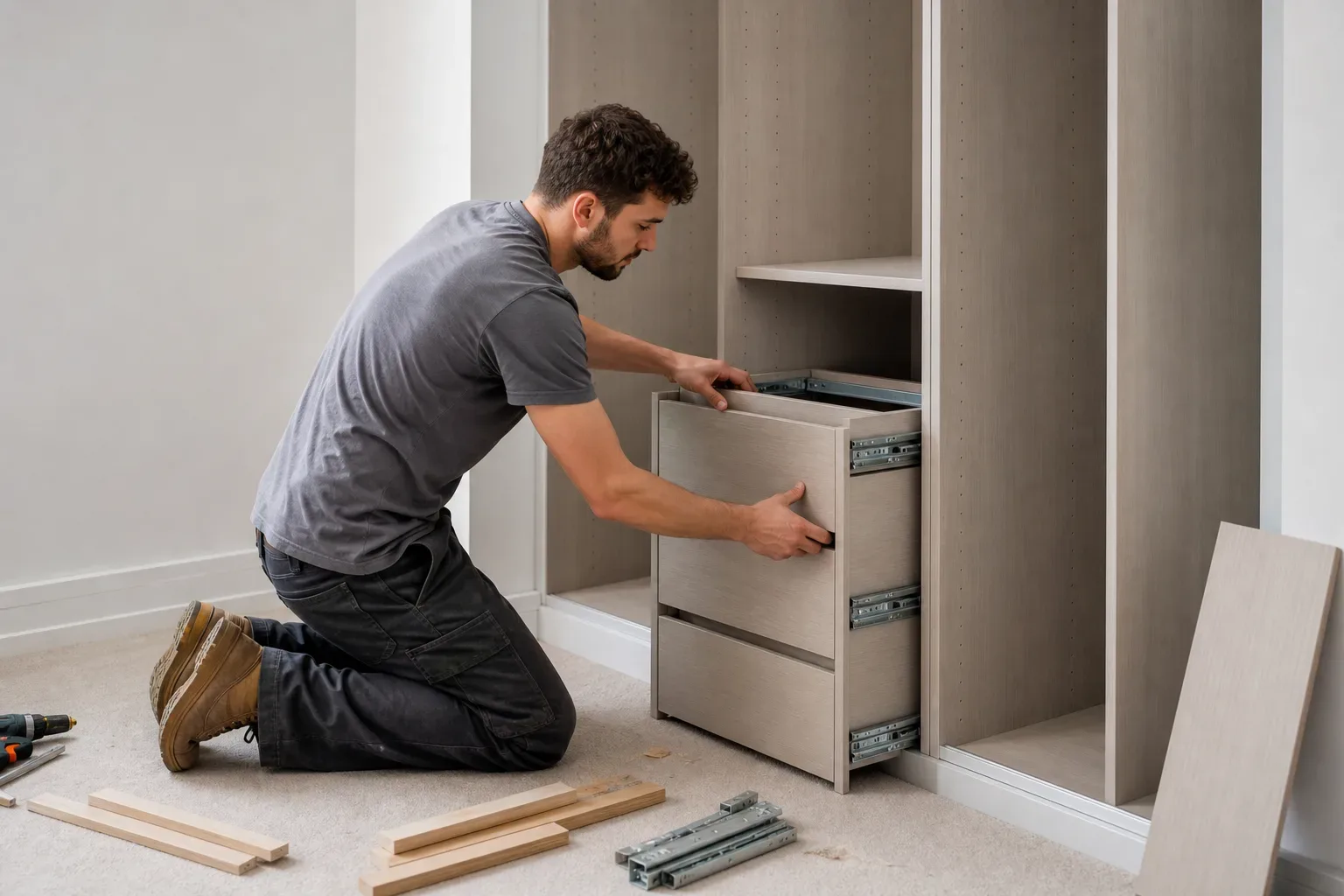
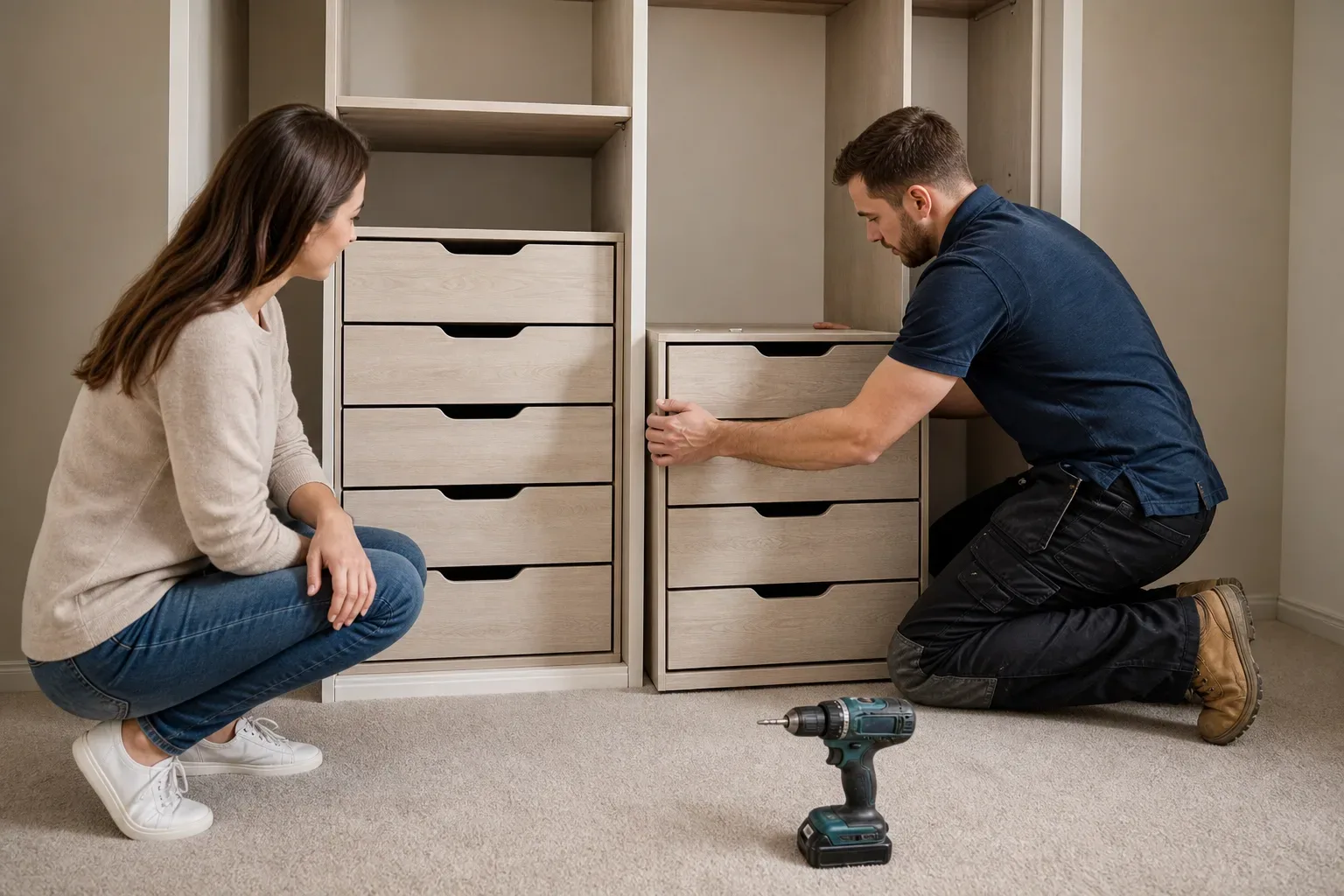
Internal drawers integrate directly into the wardrobe carcass, either as a tower of three to five drawers occupying one vertical section, or as shallower pull-outs beneath a hanging section. Soft-close drawer mechanisms are now standard on mid-range and premium installations, and they withstand considerably more daily use than push-latch equivalents.
For families in East Lothian with children sharing a bedroom, a two-section wardrobe with one half given over entirely to a five-drawer tower provides the function of a separate chest of drawers without occupying additional floor space.
Pull-Out Accessories
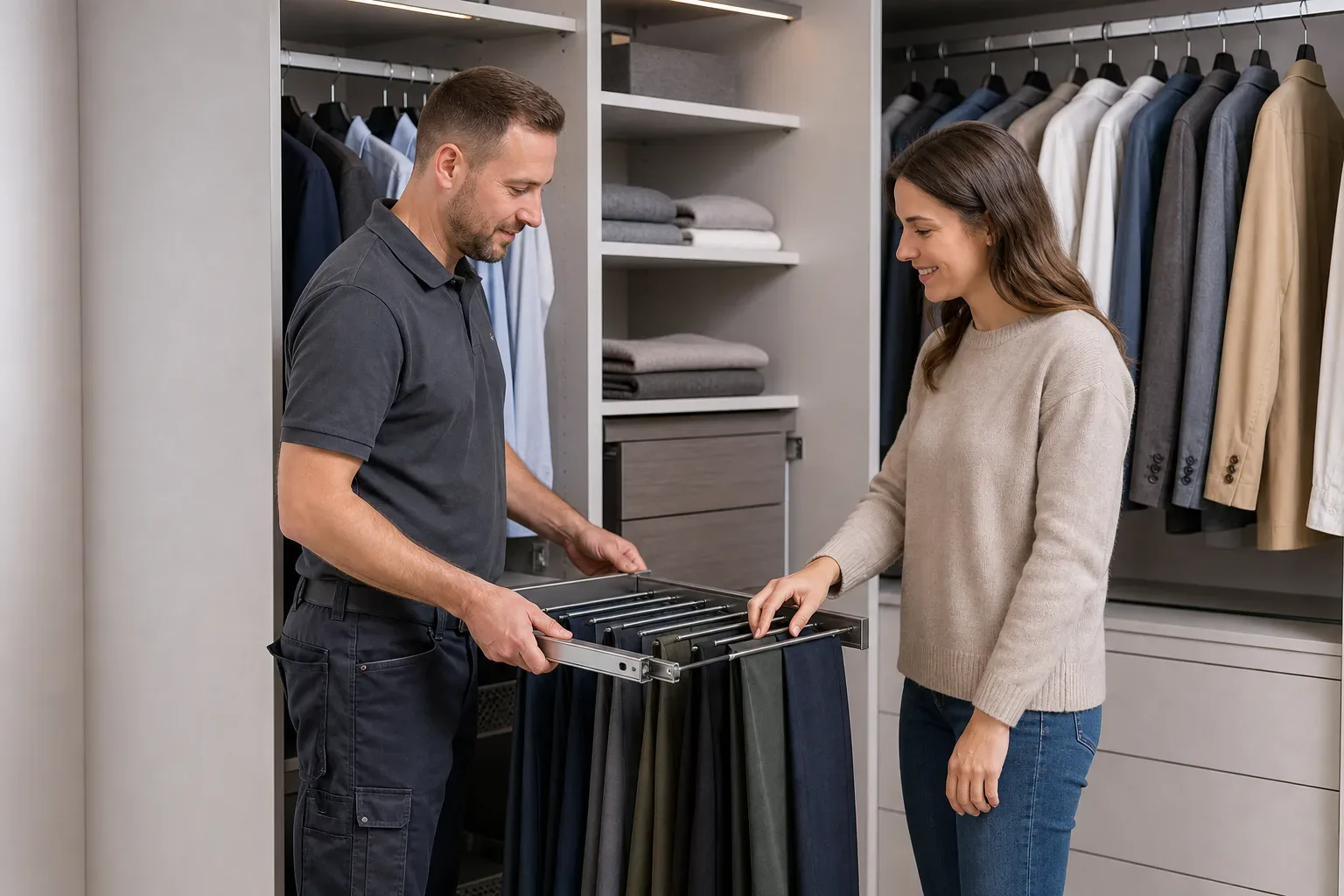
Pull-out trouser racks keep trousers crease-free and visible without folding. Tie and belt racks mount on the inside of a door or on a pull-out arm. Valet rods, short retractable bars that extend from within the wardrobe, are popular for laying out the next day's outfit without removing items from hangers.
Laundry baskets that pull out from below a hanging section are a practical addition, particularly in bedrooms without a nearby airing cupboard. These are typically specified at the design stage because they require a dedicated void in the base construction.
Internal Lighting
LED strip lighting or small puck lights inside a wardrobe are not luxury additions; they are genuinely functional, particularly in bedrooms where a wardrobe occupies an alcove with limited ambient light. Motion-activated LED strips that trigger when a door opens are the most convenient format and draw minimal power. Your installer can route low-voltage cabling during the fit-out, but specifying this before installation begins avoids additional labour costs.
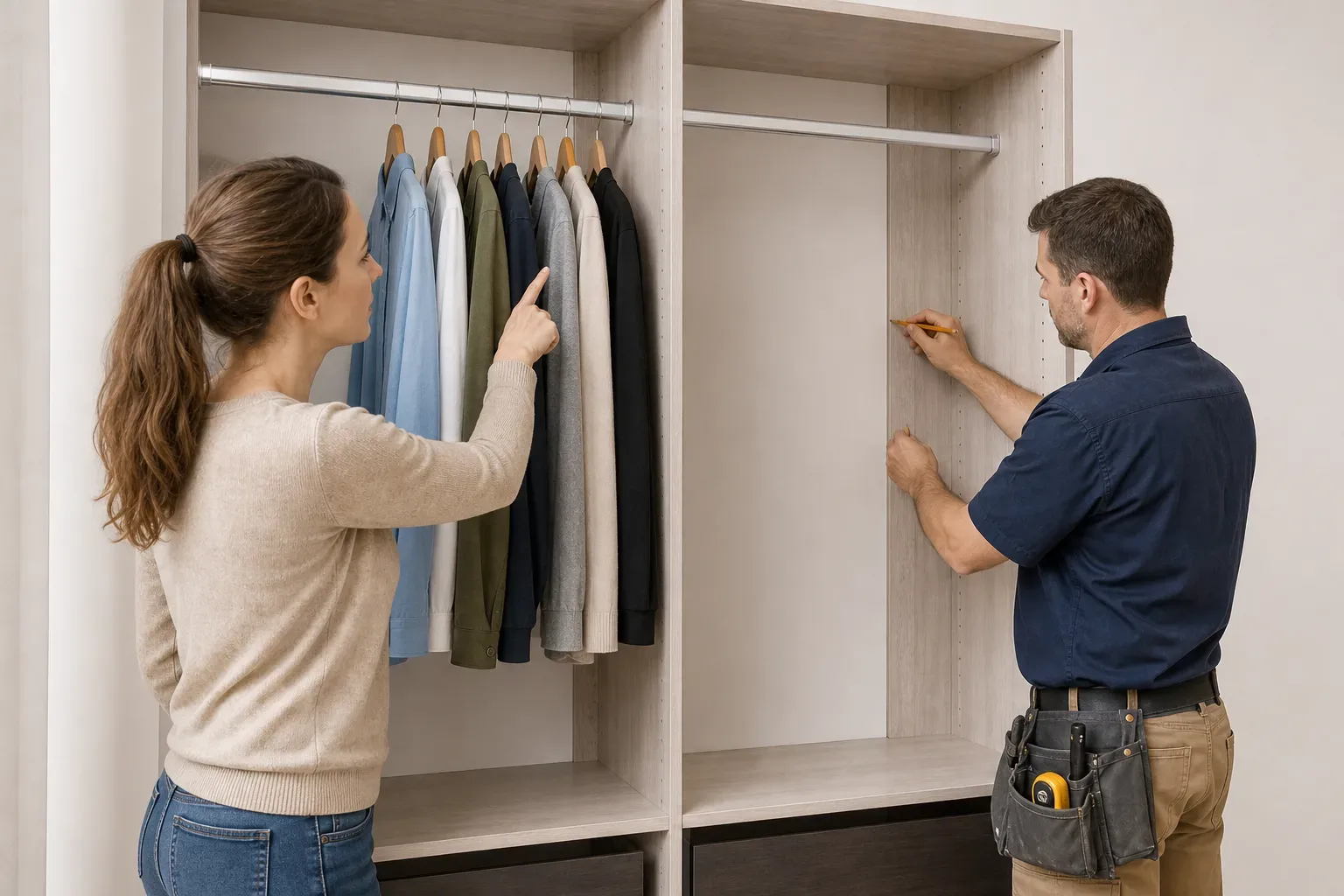
Planning Your Interior Layout - A Practical Approach
Start by listing every category of clothing and accessory that will live in the wardrobe. Assign approximate quantities to each: number of hanging garments requiring full length, number requiring half height, folded items, shoes, and drawered items. This list becomes the brief for your interior layout.
A useful rule of thumb: full-length hanging requires a clear internal height of at least 1,600 mm. Double hanging needs around 800 mm per tier. Shelf bays for folded items work best at 300–400 mm intervals. Your fitter will translate these requirements into a measured internal plan during the survey visit.
Bespoke fitters in East Lothian will typically conduct a free no-obligation home survey within 5–7 working days of your initial enquiry. Bringing your storage list to that appointment, rather than waiting for the fitter to ask, shortens the design conversation considerably.
How Interior Fittings Affect the Overall Cost
Internal fittings account for a meaningful share of the overall project cost. A fully fitted bespoke wardrobe in a standard bedroom typically runs between £1,500 and £3,500 for mid-range MDF construction, with a significant portion of that covering internal components rather than the carcass itself.
Adding a full drawer tower, integrated lighting, and pull-out accessories to a spec that would otherwise include only rails and shelves can add £400–£800 to the total, depending on the number of units and the hardware quality. Premium soft-close drawer mechanisms and solid wood drawer boxes cost more than laminated MDF equivalents, but they perform noticeably better over years of daily use.
Walk-in wardrobe installations, which typically run from £4,000 to £10,000 or more, involve more complex internal layouts as standard. The larger footprint supports full runs of shelving, island units with drawers, and dedicated hanging zones by clothing type.
Matching Fittings to Your Wardrobe Type
Alcove Wardrobes
Alcove wardrobes, built into chimney breast recesses or similar niches, have a fixed depth and width set by the recess itself. Interior fittings must be planned tightly to avoid wasted space. A shallow alcove under 500 mm deep is better suited to shelving and drawers than to hanging rails, where coat hanger depth becomes a genuine constraint.
Sliding Door Fitted Wardrobes
Sliding door fitted wardrobes give up a small amount of internal depth to the door track and panel thickness. Interior layouts should account for this reduction, particularly when specifying pull-out accessories that extend forward when opened. A fitter experienced with sliding door fitted wardrobes will factor this into the internal dimensions automatically.
Walk-In Configurations
Walk-in wardrobes offer the most flexibility for interior planning because the room itself is the wardrobe. Perimeter shelving and hanging on three walls, combined with a central island unit, makes efficient use of floor area. Zoning by clothing type, one wall for workwear, another for casual, a third for seasonal storage, makes daily use noticeably faster.
Getting the Specification Right First Time
The most common regret among homeowners after a wardrobe installation is not requesting more drawers or an additional shelf tier. These additions are expensive to retrofit because the carcass is already fixed. Specifying one extra drawer tower or two additional adjustable shelves per section at the design stage costs a fraction of what post-installation modification would.
Quality wardrobe interior fittings East Lothian installers supply are typically covered under a 5-year workmanship guarantee, giving you confidence that soft-close mechanisms, drawer runners, and fixed shelf supports will perform as installed for years of regular use.
Frequently Asked Questions
What Internal Fittings Are Included in a Standard Bespoke Wardrobe?
Most standard bespoke wardrobe installations include a hanging rail, fixed or adjustable shelving, and a basic shelf for folded items. Drawers, pull-out accessories, internal lighting, and shoe shelving are typically specified as additions during the design process and costed accordingly.
How Much Do Internal Drawers Add to a Fitted Wardrobe Cost?
A full drawer tower of three to five drawers typically adds £200–£500 to the overall project cost, depending on the number of drawers, the drawer box material, and whether soft-close mechanisms are included. Soft-close is worth specifying: the difference in daily feel and longevity is significant.
Can I Change the Internal Layout After the Wardrobe Is Installed?
Adjustable shelving systems can be repositioned without professional help, since shelf pins simply move to different holes in the uprights. Fixed elements such as drawer towers, integrated lighting, and fixed rail supports are considerably harder to alter post-installation, which is why getting the specification right before fitting day matters.
What Minimum Depth Does a Wardrobe Need for Standard Coat Hangers?
A minimum internal depth of 560 mm is needed for coat hangers to sit comfortably without pressing against the door. Shallow alcoves in older East Lothian properties sometimes fall short of this, so confirming the available depth during the survey visit is an important early step.
How Long Does a Wardrobe with a Complex Interior Layout Take to Install?
A single fitted wardrobe with a straightforward interior typically takes 1–2 days to install. A larger project with multiple sections, integrated drawers, lighting, and pull-out accessories can extend to 3–5 days, which is standard for full-bedroom or walk-in configurations.