Wardrobe Lighting Options for Fitted Wardrobes in East Lothian
Why Lighting Makes a Difference Inside a Fitted Wardrobe
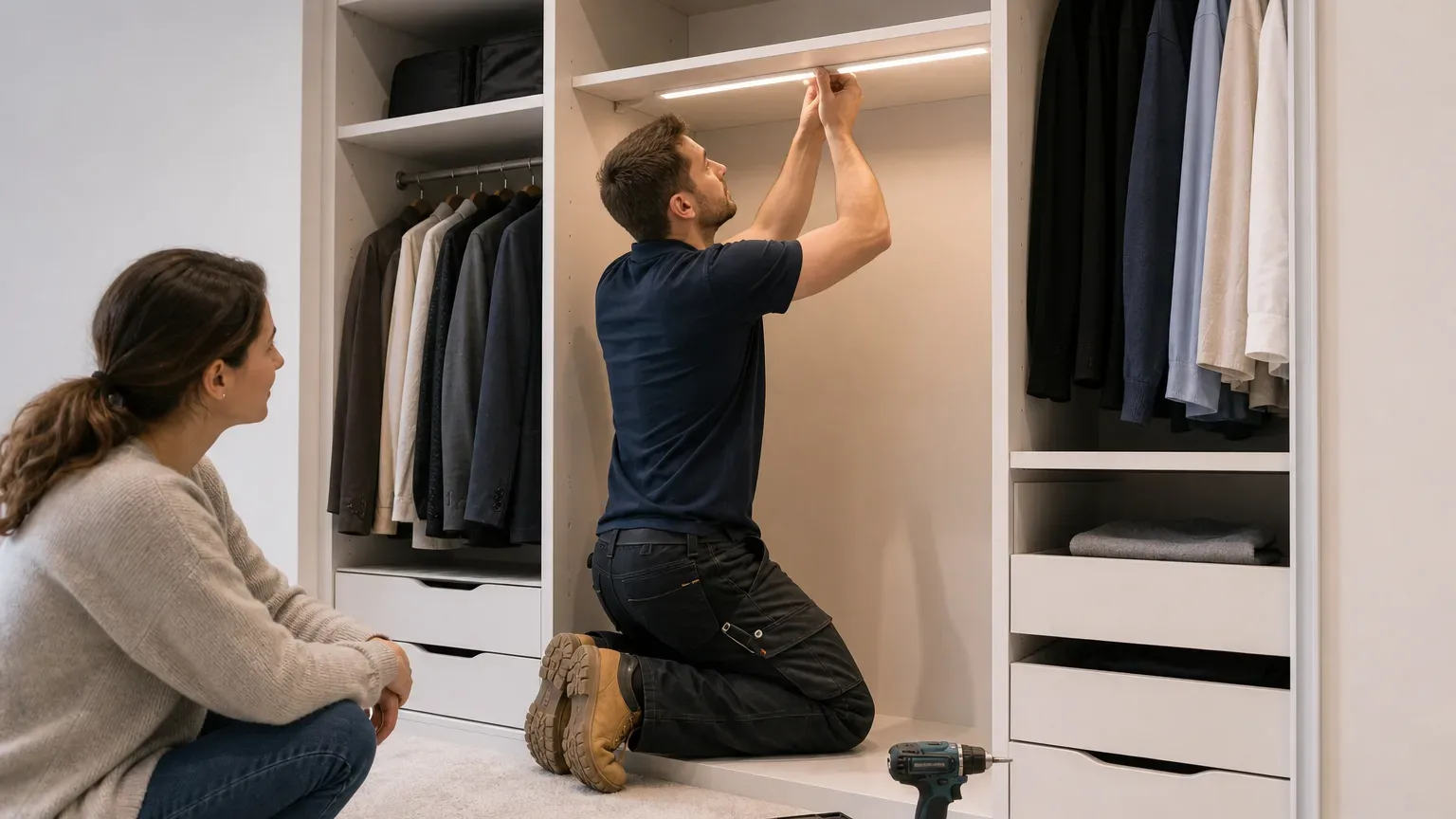
A fitted wardrobe without lighting is a dark cabinet. Even the best interior organisation, quality hanging rails and pull-out drawers lose their value when you are hunting for a navy jacket at 7 a.m. in a dim room. Good integrated lighting makes every shelf, rail and drawer visible at a glance, reduces morning frustration and adds a genuinely polished finish to bespoke joinery.
East Lothian homes vary widely, from Victorian terraces in Musselburgh to newer builds in Tranent and stone cottages near North Berwick. Bedroom sizes and natural light levels differ across those properties, so the right lighting strategy depends on both the wardrobe configuration and the room itself.
The Main Types of Fitted Wardrobe Lighting
LED Strip Lighting
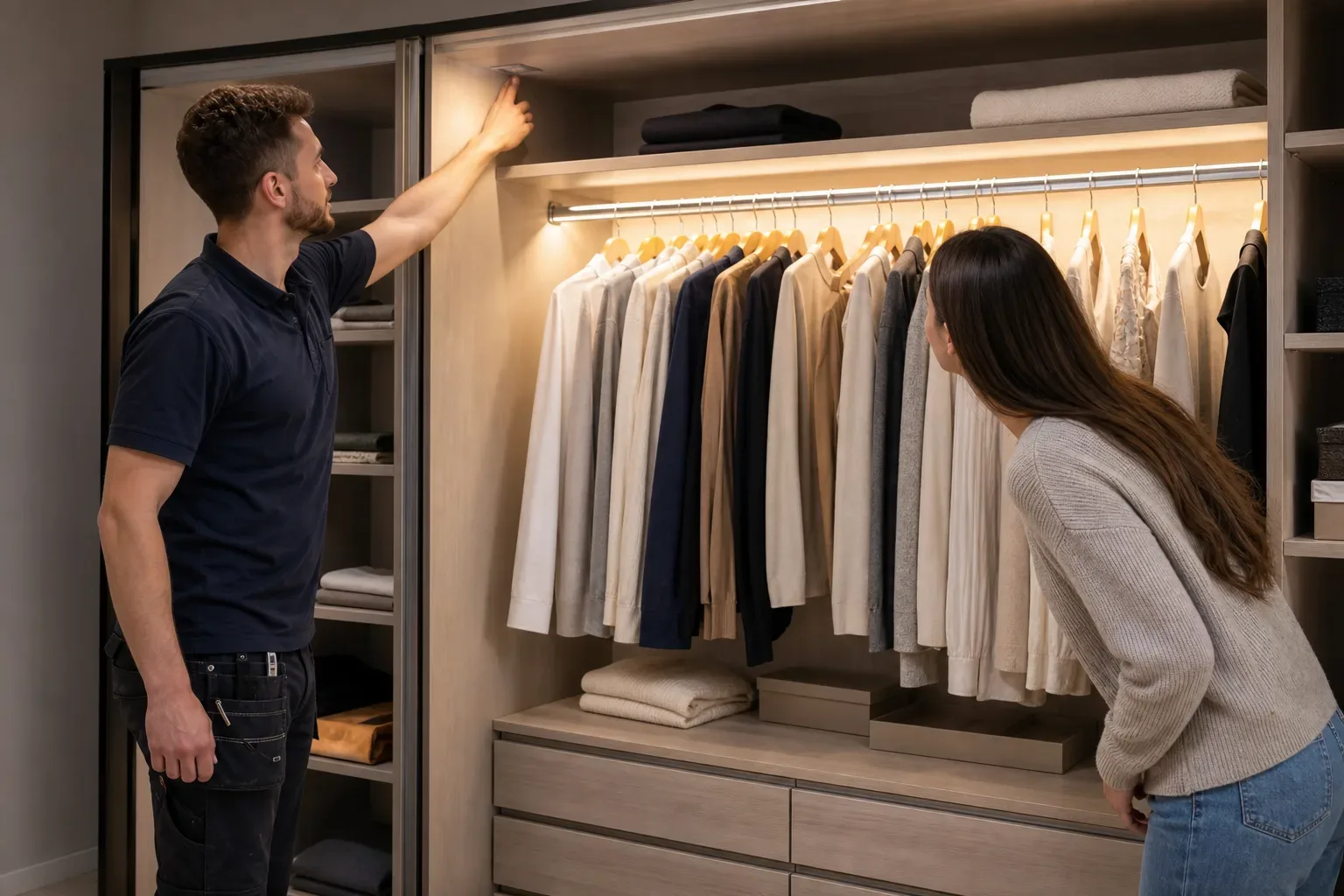
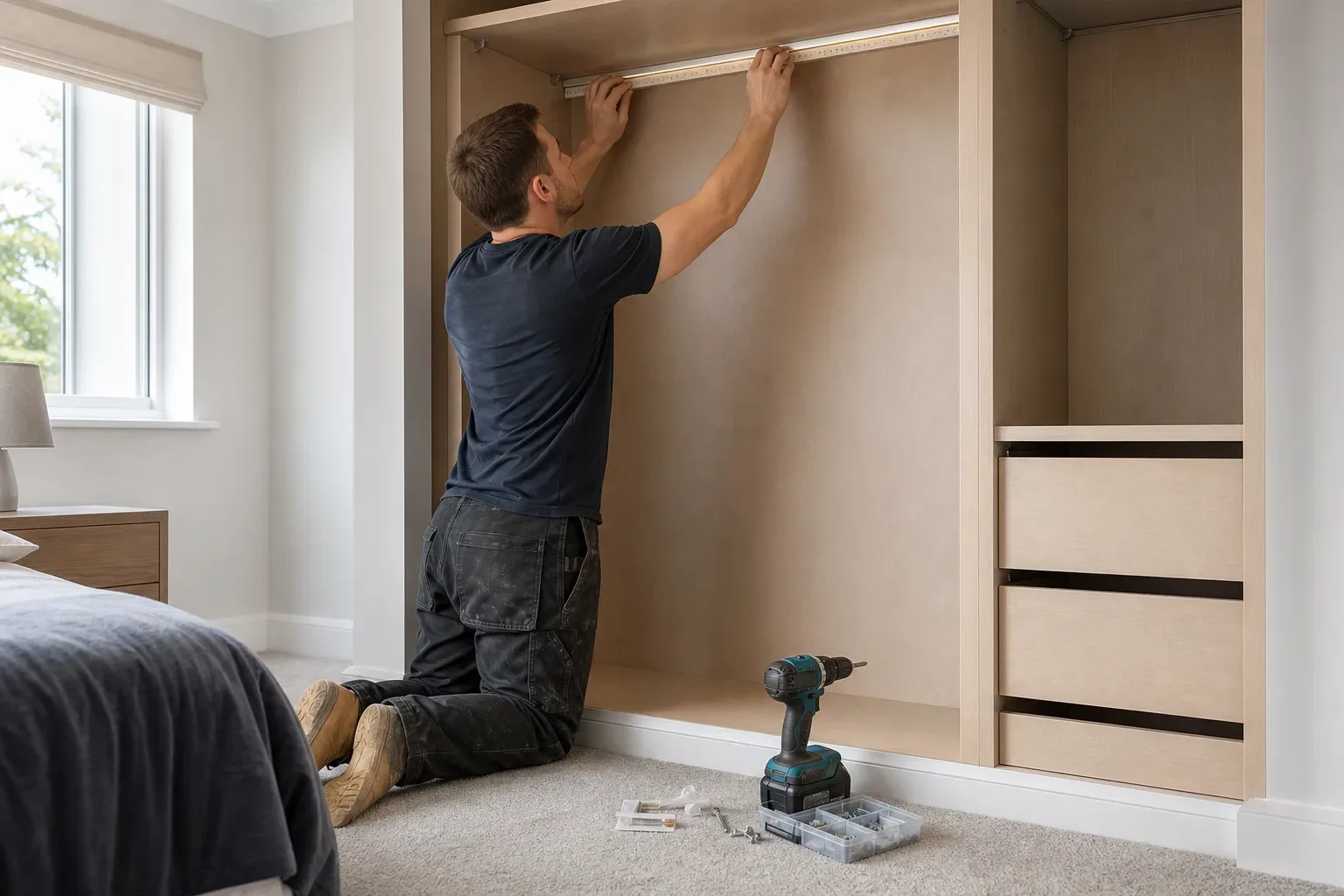
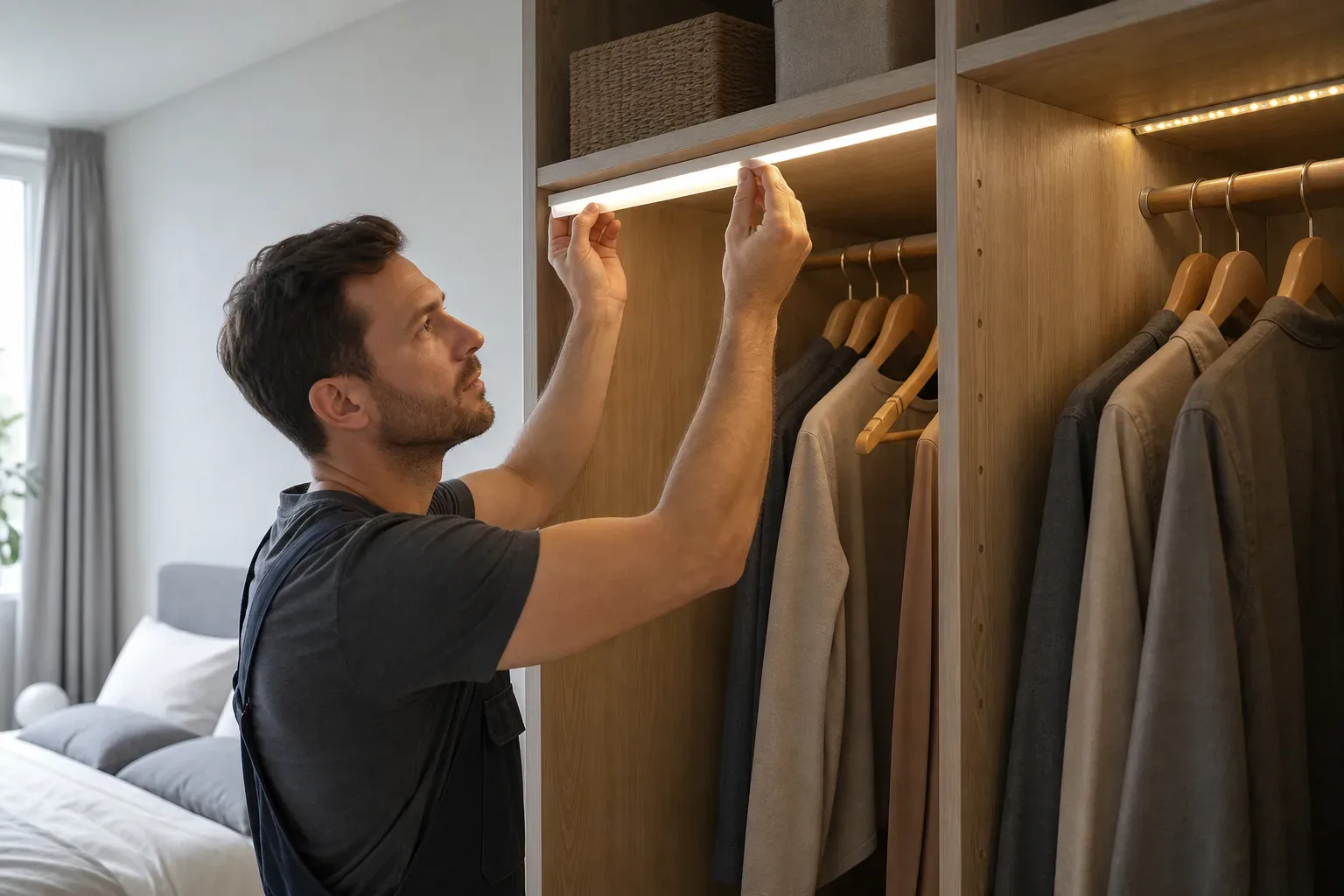
LED strips are the most popular choice for fitted wardrobes fitted across East Lothian. They run along the underside of shelves, the top of internal carcasses or the full height of a hanging section, casting even, shadow-free light across clothing. Modern LED strips draw very little power, typically 4–10 watts per metre, and produce minimal heat compared with older fluorescent options.
Colour temperature matters here. A warm white (2700–3000K) suits bedroom environments and makes colours read naturally. Cool white (4000K+) is sharper but can feel clinical inside a wardrobe. Many fitters recommend a 3000K strip as a practical middle ground.
Recessed Downlights and Spotlights
Recessed spotlights built into the top panel of a wardrobe create a clean, high-end look with no visible fittings. They work particularly well in taller units or walk-in wardrobes where a single strip would not cover the full depth of the space. The trade-off is that they require a deeper top panel, usually at least 100 mm, to house the fitting and any required transformer.
Adjustable spotlights let you direct light toward specific zones, such as a shoe shelf or a dedicated accessory drawer. For a walk-in installation costing £4,000–£10,000+, adding directional recessed lighting is a proportionate upgrade that significantly affects day-to-day usability.
Sensor-Activated and Door-Triggered Lighting
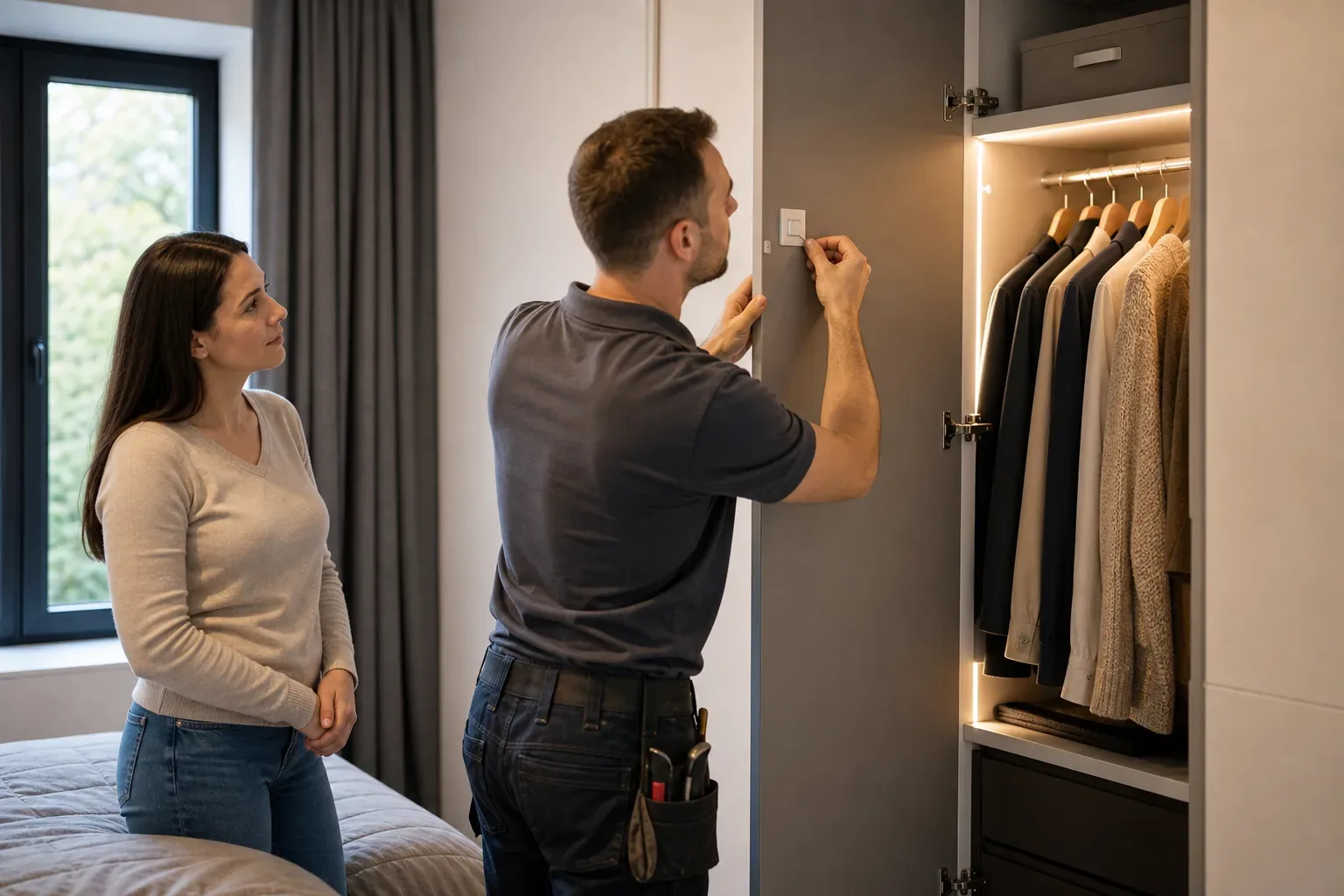
Motion sensors or door-activated switches mean the light comes on automatically when you open the wardrobe and turns off when you close it. This is both practical and energy-efficient. Door-triggered options use a simple push-button switch mounted on the door frame, similar in principle to a fridge light, while PIR (passive infrared) sensors activate on movement within a set range.
For sliding door fitted wardrobes, PIR sensors are the more practical solution because there is no single hinge point to mount a door switch. A sensor mounted inside the wardrobe or on the door track detects hand movement or the sliding panel and triggers the circuit.
Puck Lights and Individual Cabinet Lights
Battery-powered puck lights offer a simple, no-wiring option for retrofitting light into an existing wardrobe. They adhere to shelves or under rails and are operated manually or by a tap sensor. The drawback is battery maintenance: a busy household will replace batteries every few months, and the spread of light from a single puck is limited.
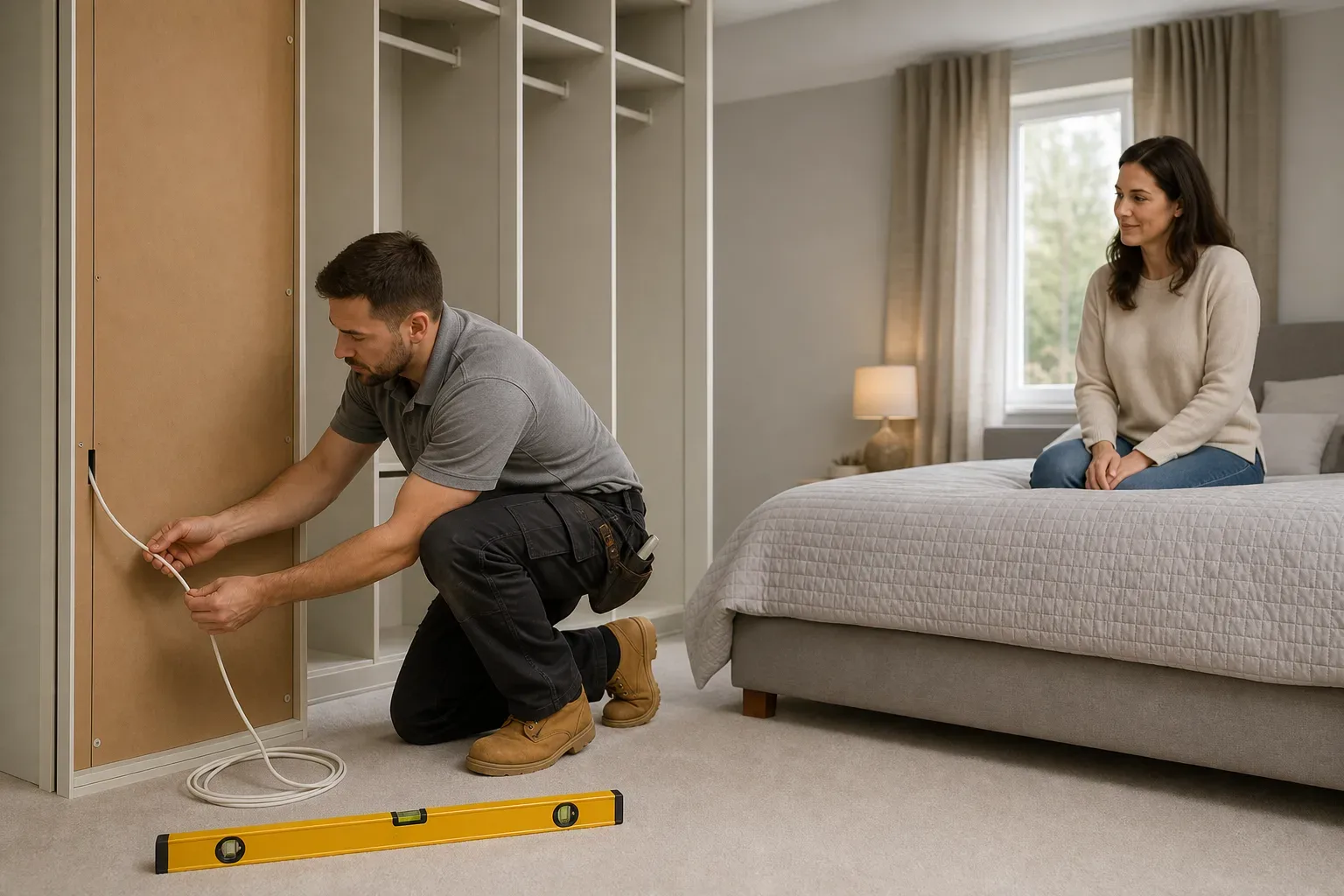
Hardwired puck or disc lights remove the battery problem and give a neater result. A competent joinery installer working on a new build or full refurbishment can route low-voltage cables cleanly through the carcass before panels are fixed, so the wiring remains invisible.
Wiring and Electrical Considerations
Do Wardrobe Lights Need an Electrician?
Low-voltage LED systems running off a 12V or 24V transformer do not require a qualified electrician to install the lights themselves, but the transformer still needs to connect to a mains supply. In Scotland, any new mains circuit or consumer unit work falls under Part P of building regulations, and a registered electrician should carry out or certify that element. A fitted wardrobe specialist in East Lothian will typically either include a basic spur or advise you to arrange a separate electrical visit.
Planning ahead pays off here. If your bedroom already has a switched spur on the wardrobe wall, wiring in LED strips during a new installation adds minimal time and cost. Retrofitting wiring after cabinetry is fixed is substantially more disruptive.
Integration with Smart Home Systems
Smart dimmers and Zigbee or Z-Wave compatible LED drivers allow wardrobe lighting to be controlled via a phone app or integrated into systems such as Philips Hue or Apple HomeKit. This is a niche but growing request among buyers commissioning premium bespoke work in the £3,500–£8,000+ range. The hardware cost is modest relative to the overall project, typically £50–£150 for compatible drivers and switches.
Choosing the Right Light for Your Wardrobe Configuration
Single Fitted Wardrobes
For a standard single fitted wardrobe, one continuous LED strip along the front top rail is usually sufficient. A 1,000 mm–1,200 mm strip at 6–8 watts per metre gives enough output for a standard hanging section and a shelf or two above it. Installation typically takes place within the 1–2 day fitting window for a single wardrobe, adding little to the overall schedule.
Full Bedroom and Walk-In Wardrobes
A full-bedroom fitted installation or a walk-in wardrobe benefits from zoned lighting. A practical approach divides the space into hanging zones, shelf zones and drawer zones, each with its own strip or set of recessed spots. This avoids the uneven illumination that comes from a single light source trying to cover 3–4 metres of wardrobe frontage.
Full bedroom and walk-in projects typically run 3–5 days. Routing lighting cables during the structural fit-out, before doors and trims are hung, is the cleanest and most cost-effective method. Specifying lighting at the initial survey stage avoids later alterations.
Practical Colour and Finish Choices
The visible parts of wardrobe lighting, whether that is an aluminium LED channel, a chrome puck or a brushed-steel spot bezel, should match the interior hardware. A wardrobe fitted with brushed brass handles and shelf pins looks best with a warm-toned or brushed metal light fitting rather than a polished chrome one. Most suppliers offer LED channel extrusions in silver, black and white, which cover the majority of contemporary finishes used by East Lothian fitted wardrobe specialists.
Diffuser covers on LED channels soften the light and eliminate visible hotspots along the strip. Frosted polycarbonate diffusers are standard and cost almost nothing at specification stage, but they make a visible difference to the quality of light inside the wardrobe.
Budgeting for Wardrobe Lighting
LED strip lighting added during a new fitted wardrobe installation typically costs £80–£250 per wardrobe, depending on the number of runs, the quality of the strip and whether a sensor or dimmer is included. Recessed spotlights sit higher, at £40–£90 per fitting including installation labour within a larger project. Smart-compatible systems add a further £50–£150 for drivers and control hardware.
These figures assume lighting is specified at the quote stage rather than added retrospectively. Retrofitting any hardwired lighting after a wardrobe is fully installed requires access to existing panels and will cost more in labour. Raising lighting requirements at your initial survey, which is available as a free no-obligation home survey, is the straightforward way to keep costs predictable.
Frequently Asked Questions
What Is the Best Type of Lighting for a Fitted Wardrobe?
LED strip lighting is the most practical choice for most fitted wardrobes. It runs along shelves or hanging rails, draws very little power and produces minimal heat. A colour temperature of around 3000K gives natural-looking light that suits bedroom environments well.
Do I Need an Electrician to Add Lights to My Fitted Wardrobe in East Lothian?
Low-voltage LED systems can be installed by a joinery fitter, but the transformer must connect to a mains supply. In Scotland, any new mains circuit work requires a registered electrician. Specifying lighting at the initial survey stage means both trades can be coordinated without extra disruption.
Can Wardrobe Lighting Be Added to Sliding Door Fitted Wardrobes?
Yes. PIR motion sensors are the most practical solution for sliding door fitted wardrobes because there is no fixed hinge point for a door-triggered switch. A sensor mounted inside the wardrobe detects movement and activates the light automatically.
How Much Does Fitted Wardrobe Lighting Cost to Add?
LED strip lighting specified during a new wardrobe installation typically adds £80–£250 per wardrobe, depending on the number of runs and whether a sensor or dimmer is included. Recessed spotlights cost roughly £40–£90 per fitting when installed as part of a larger project. Retrofitting after installation will cost more in labour.
Is Wardrobe Lighting Worth Including in a Bespoke Fitted Wardrobe Project?
For most buyers it is a cost-effective addition relative to the overall project spend. On a mid-range bespoke wardrobe costing £1,500–£3,500, a well-specified LED system represents a small percentage of the total but has a noticeable effect on day-to-day usability. Raising it at the survey stage keeps costs predictable and avoids retrospective alterations.