Best Paint Finishes for Fitted Wardrobes in East Lothian
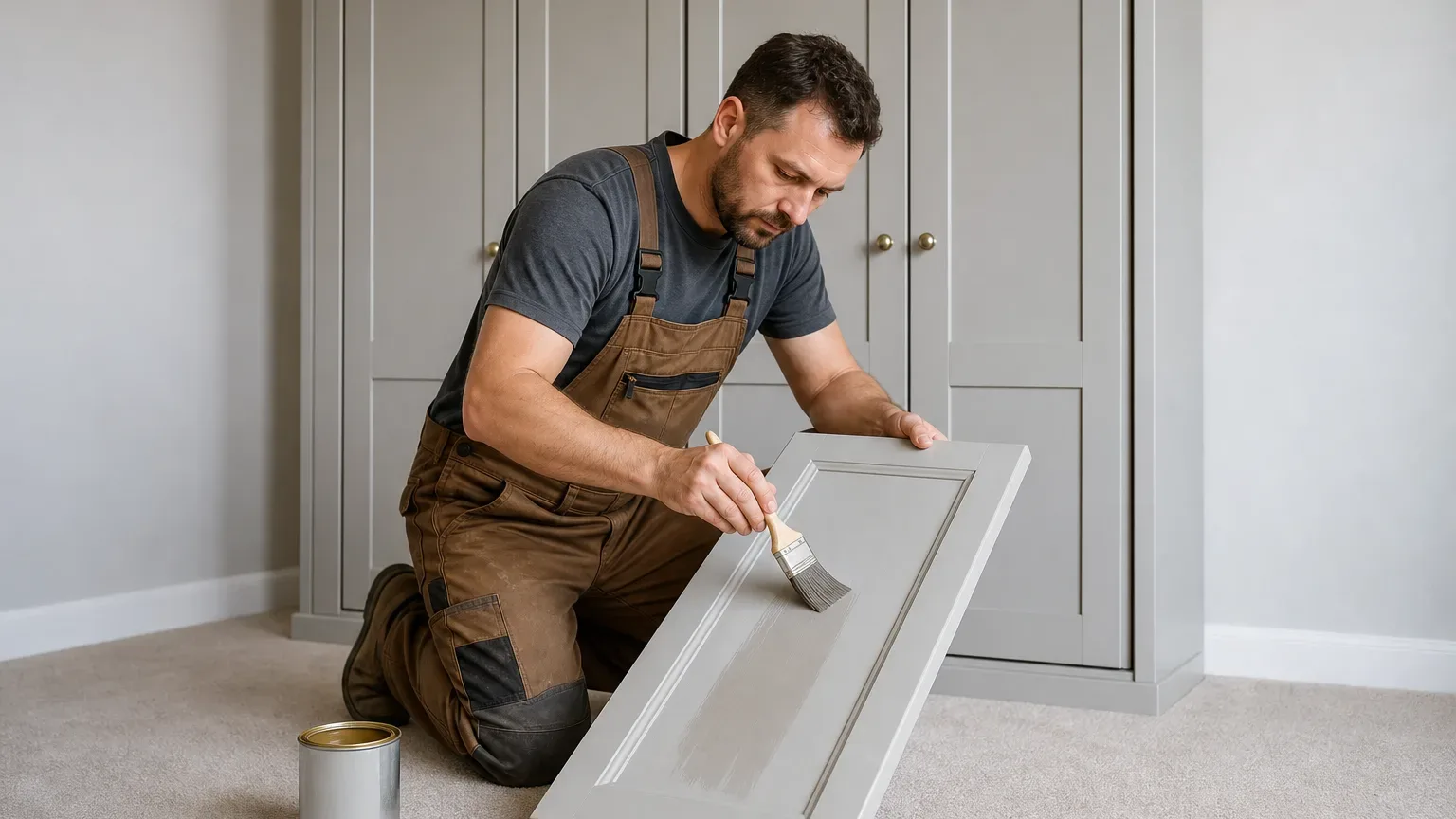
Why Paint Finish Matters More Than Most People Expect
The finish on a fitted wardrobe does more than determine how it looks on day one. It affects how the surface wears over years of daily use, how easy it is to clean, and how well it holds up in rooms that fluctuate between warm and cool, which is a real consideration in East Lothian homes where older stone properties can run cooler and damper than modern new-builds. A poorly chosen finish chips, yellows, or shows fingerprints within months. The right one stays crisp for a decade or more.
Most fitted wardrobe specialists apply paint over moisture-resistant MDF or solid wood, depending on the specification. Each substrate accepts paint differently, and the finish type interacts with both the material and the primer used underneath. Getting those layers right is as important as selecting the colour itself.
The Main Painted Fitted Wardrobe Finishes Explained
Spray-Applied Lacquer
Spray lacquer is the trade standard for professional fitted wardrobes and the finish most bespoke joinery workshops in East Lothian use as their default. Applied in a controlled environment, lacquer produces a factory-smooth surface with no brush marks or roller texture. It cures to a hard, semi-flexible film that resists knocks better than brushed paint.
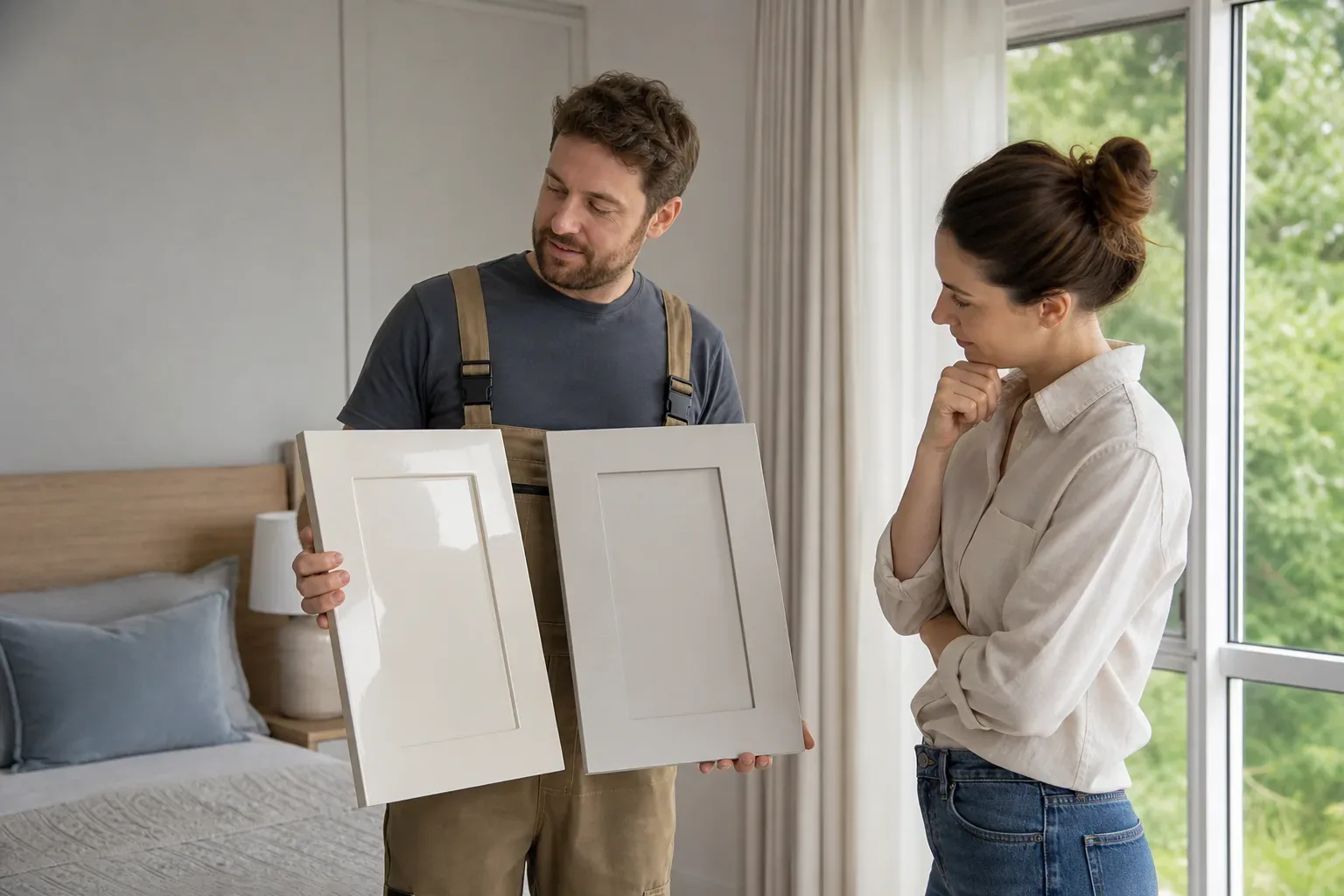
You can specify lacquer in matt, satin, or high-gloss sheens. Satin tends to be the most practical: it diffuses fingerprints and minor scratches far better than high-gloss but retains a cleaner, more finished look than flat matt. High-gloss lacquer looks striking in photography but shows every thumbprint and dust particle in real life, which many East Lothian homeowners find frustrating within a few weeks of installation.
Two-Pack Polyurethane
Two-pack (2K) polyurethane finish is the hardest wearing option available for painted wardrobes. It uses a resin and a hardener that react chemically during curing, producing a surface closer in durability to automotive paint than standard decorating coatings. Scratches and cleaning chemicals that would mark a standard lacquer leave 2K largely unaffected.
The trade-off is cost and process. Applying 2K requires specialist spray equipment and strict ventilation because the isocyanate hardener is hazardous before curing. Few domestic painters carry the gear, so this finish is typically available only through joinery workshops that supply and spray off-site before delivery. Expect it to add 10–15% to the finishing cost versus standard lacquer.
Hand-Applied Eggshell
Oil-based or water-based eggshell, brushed or rolled on site, suits traditional interiors and period properties, which are common throughout Haddington, North Berwick, and many of the older village addresses in East Lothian. The sheen level sits between matt and satin and works well with classic shaker-style doors and moulded frame details.
Eggshell applied by a skilled painter can look excellent, but the finish depends heavily on surface preparation. On MDF, any missed filler lines or grain raise will telegraph through. Water-based eggshell dries faster, is lower in VOCs, and re-coats more cleanly than its oil-based counterpart. Oil-based remains slightly harder and more moisture-resistant once fully cured, which takes up to seven days.
Hard Chalk Paint and Mineral Finishes
Chalk-style and mineral paints have become a popular choice for homeowners repainting existing wardrobes or finishing built-in alcove wardrobes on a tighter budget. They require minimal preparation, adhere to most surfaces without a dedicated primer, and dry quickly. The flat, chalky finish reads well in rooms styled around natural textures and muted palettes.
Durability is the weak point. Untreated chalk paint marks and scuffs easily in a wardrobe context, where handles, clothing, and bags make frequent contact. Sealing with a hard wax or clear water-based topcoat improves resilience significantly but introduces a slight sheen that alters the original flat appearance. For high-traffic wardrobes or family bedrooms, spray lacquer or 2K is the more honest long-term choice.
Choosing a Colour That Works in East Lothian Light
Natural light in East Lothian varies substantially depending on whether a bedroom faces east toward the coast or sits on the north or west elevation of the property. Rooms that receive strong morning light on the coast around Dunbar or North Berwick can handle deeper, cooler tones such as slate blue or warm charcoal without feeling oppressive. North-facing rooms in Musselburgh or Tranent benefit from warmer off-whites and greiges that reflect what light is available rather than absorbing it.
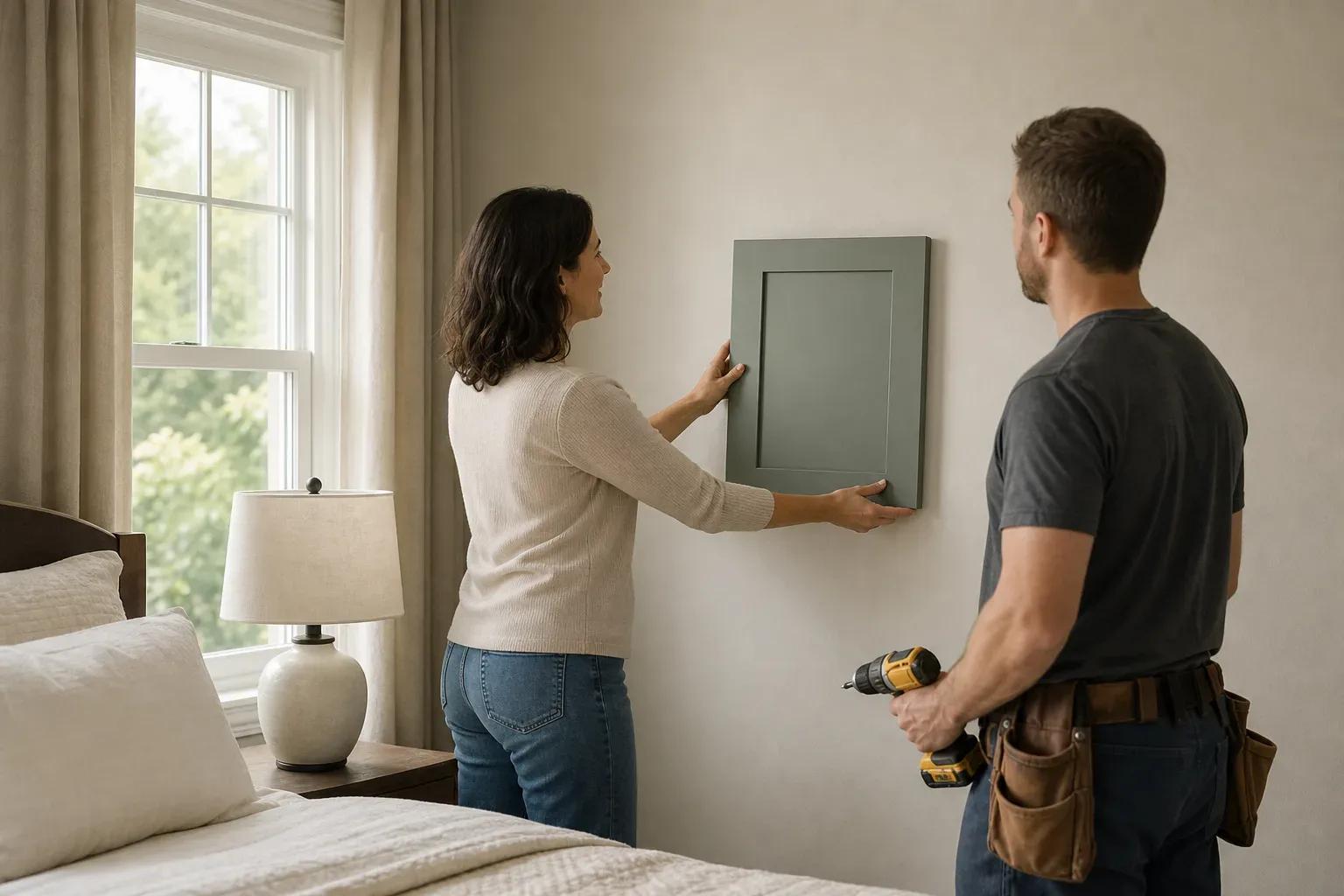
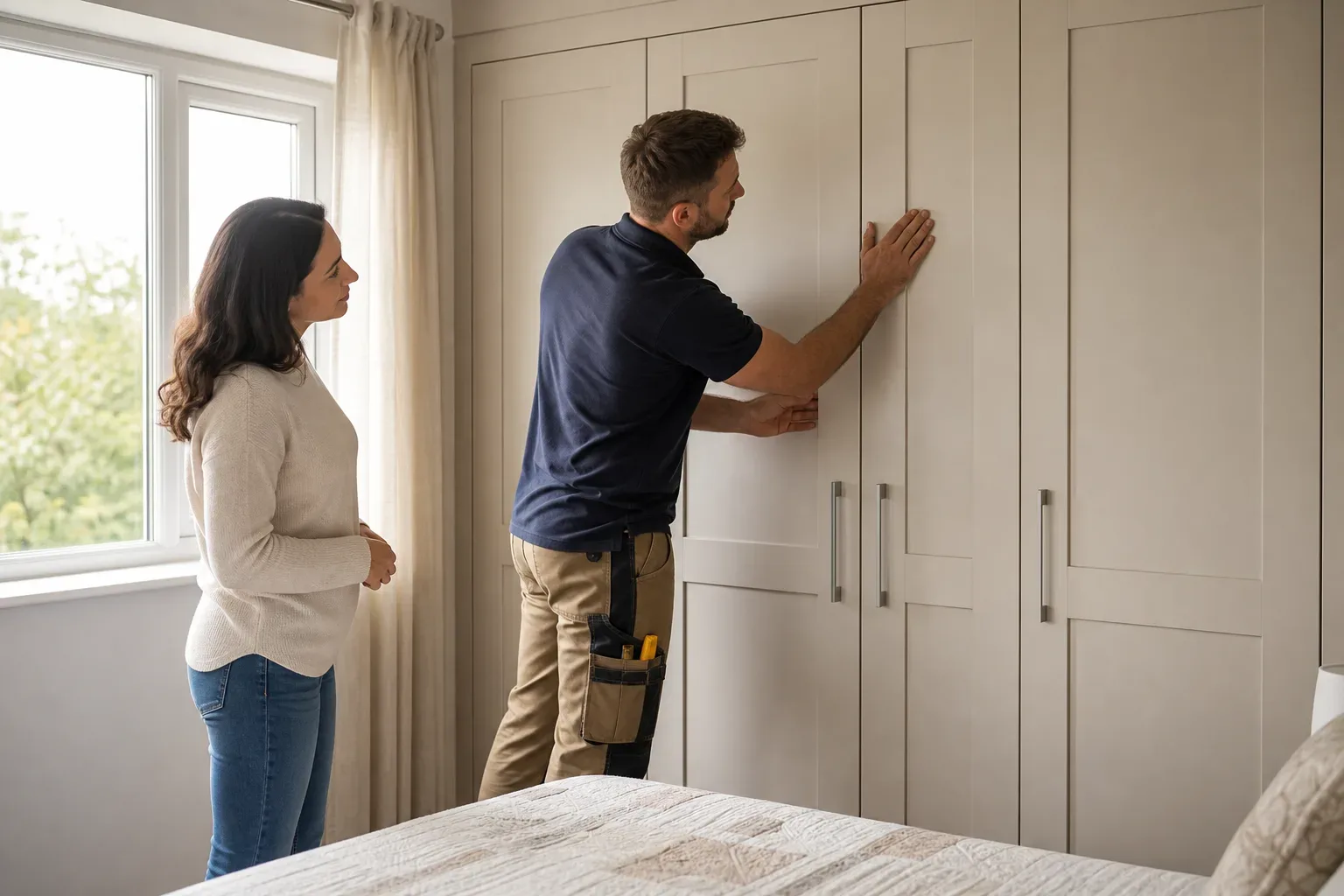
Test paint colours in the actual room at different times of day before committing. A shade that looks balanced in a showroom under artificial lighting often reads differently against stone walls or timber floors. Most fitted wardrobe specialists will supply a sample door panel in your chosen colour before manufacturing the full set, and requesting that service is worthwhile.
Matt, Satin, or Gloss - Which Sheen to Choose
Satin finishes represent the most practical choice for fitted wardrobes in the majority of East Lothian bedrooms. They strike a balance between cleanability and glare: a damp cloth removes most marks without leaving burnish patches, which matt finishes are prone to. Gloss works well as an accent on a single feature door within a larger run but can feel hard and reflective across an entire wall of wardrobes.
Matt finishes suit heritage-style rooms where a painted-furniture look is the priority over easy maintenance. Accepting that you will need to spot-clean carefully and repaint sooner than with a harder finish is part of that choice. Some homeowners deliberately choose matt for its authenticity and find the maintenance manageable.
How Finish Affects Overall Project Cost
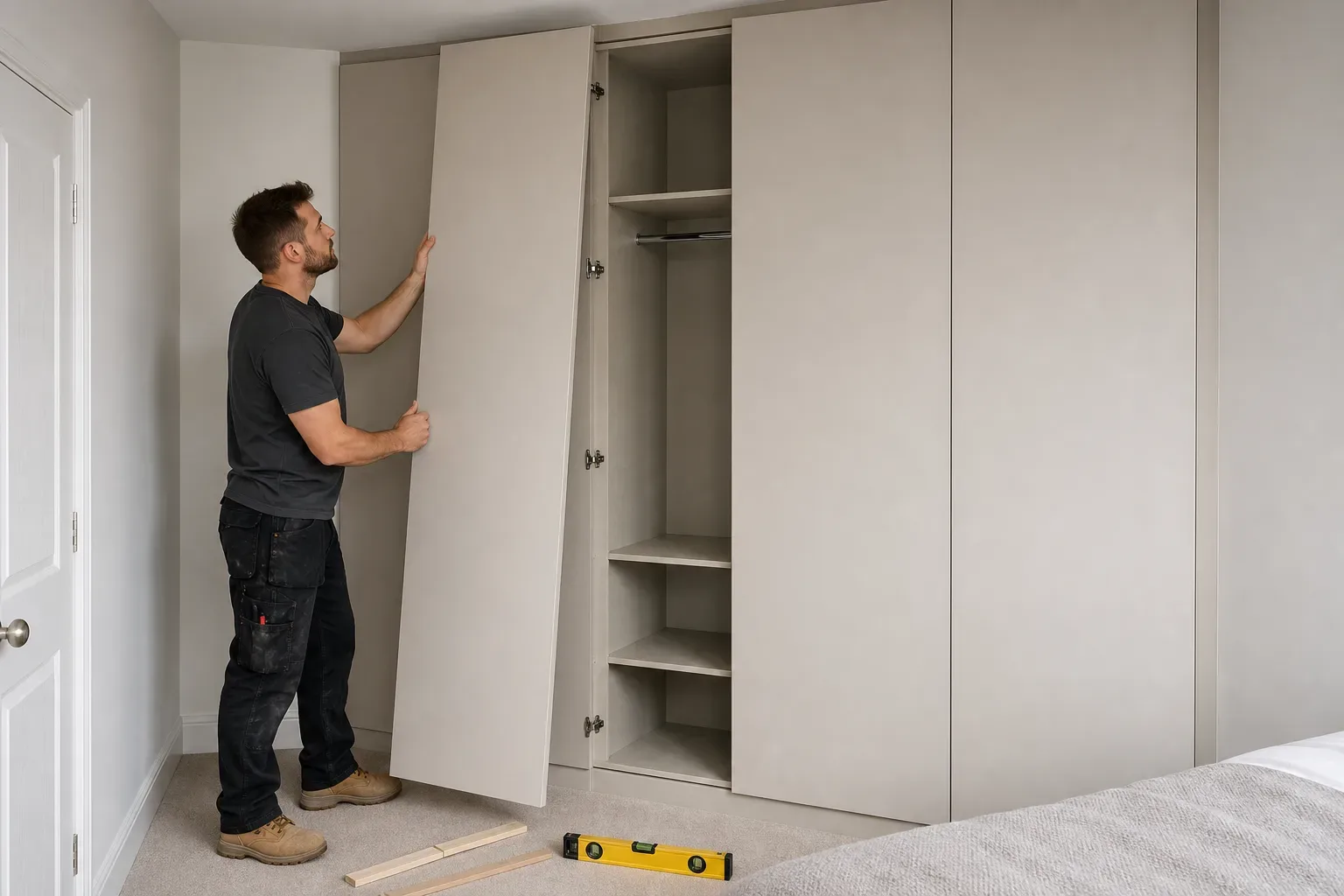
Paint finish influences pricing at two points: the material cost of the coating itself, and whether spraying is done in a workshop (adding transport and logistics) or on site (requiring masking and environmental controls). Standard lacquer in satin or matt is typically included within a mid-range bespoke wardrobe quote. Fully fitted bespoke wardrobes in a standard bedroom generally run £1,500–£3,500 in the East Lothian market, covering MDF or mixed-material construction and a professional spray finish.
Upgrading to 2K polyurethane or requesting a specialist colour match from a premium paint brand adds to that figure. High-spec solid wood or handleless bespoke installations with premium finishes sit in the £3,500–£8,000-plus range. A free no-obligation home survey gives you the opportunity to discuss finish options and their cost implications before any commitment is made, and most fitted wardrobe specialists in the area can arrange a survey appointment within 5–7 working days of your enquiry.
Making the Finish Last
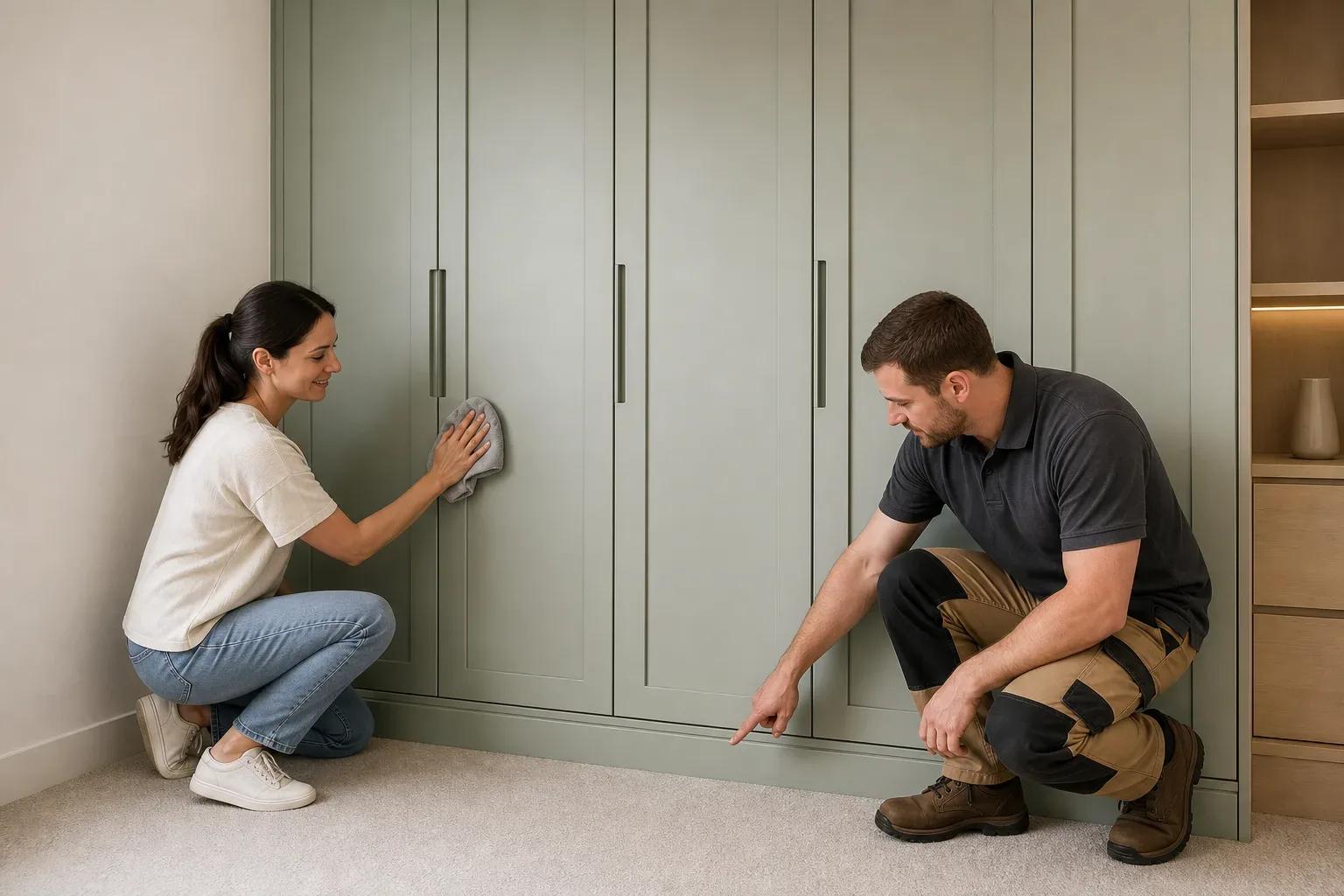
Even the most durable spray lacquer benefits from straightforward maintenance. Wipe surfaces with a damp microfibre cloth rather than abrasive sponges. Avoid silicone-based polishes, which build up a cloudy film over time on lacquered surfaces. If a panel receives a chip or scratch, most workshops can supply a small quantity of the original mixed paint so you can touch up without the repair being visible.
Workmanship guarantees from reputable East Lothian installers typically cover five years, but the finish itself will outlast that if it is properly specified and cared for. Choosing the right coating from the outset is far less disruptive than repainting a full wardrobe installation two or three years down the line.
Frequently Asked Questions
What Are the Best Painted Fitted Wardrobe Finishes?
Spray-applied lacquer in a satin sheen is the most practical choice for most fitted wardrobes. It produces a smooth, durable surface that cleans easily and resists everyday knocks. Two-pack polyurethane is harder wearing still and suits high-use family bedrooms, while hand-applied eggshell works well in period properties where a traditional painted-furniture look is the priority.
How Long Does Paint Last on a Fitted Wardrobe?
A professionally applied spray lacquer or two-pack polyurethane finish typically lasts 10 years or more with normal care. Hand-applied eggshell and chalk-style finishes have a shorter lifespan in high-contact areas and may need refreshing after 3–5 years depending on use. Proper surface preparation and a quality primer significantly extend how long any finish holds.
Is Spray Lacquer Better Than Brushed Paint for Fitted Wardrobes?
Yes, for most fitted wardrobe applications. Spray lacquer is applied in a controlled environment and cures to a hard, brush-mark-free film that is more consistent and more durable than brushed paint. Brushed eggshell can produce good results in the hands of a skilled decorator but requires more preparation and is more susceptible to marks and moisture over time.
What Paint Colours Work Best in East Lothian Bedrooms?
The best colour depends on the room's light. Coastal-facing rooms in Dunbar or North Berwick handle deeper tones such as slate blue or warm charcoal well. North-facing rooms in Musselburgh or Tranent benefit from warmer off-whites and greiges that reflect available light. Always test a sample door panel in the actual room at different times of day before committing to a full production run.
Does the Paint Finish Affect the Cost of Fitted Wardrobes?
Yes. Standard spray lacquer is typically included within a mid-range bespoke wardrobe quote, which runs £1,500–£3,500 for a standard bedroom installation in East Lothian. Upgrading to two-pack polyurethane or a premium colour-matched coating adds roughly 10–15% to finishing costs. High-spec installations with premium finishes can reach £3,500–£8,000 or more.