Solid Wood vs MDF Fitted Wardrobes - Which Is Best for East Lothian Homes?
The Core Difference Between the Two Materials
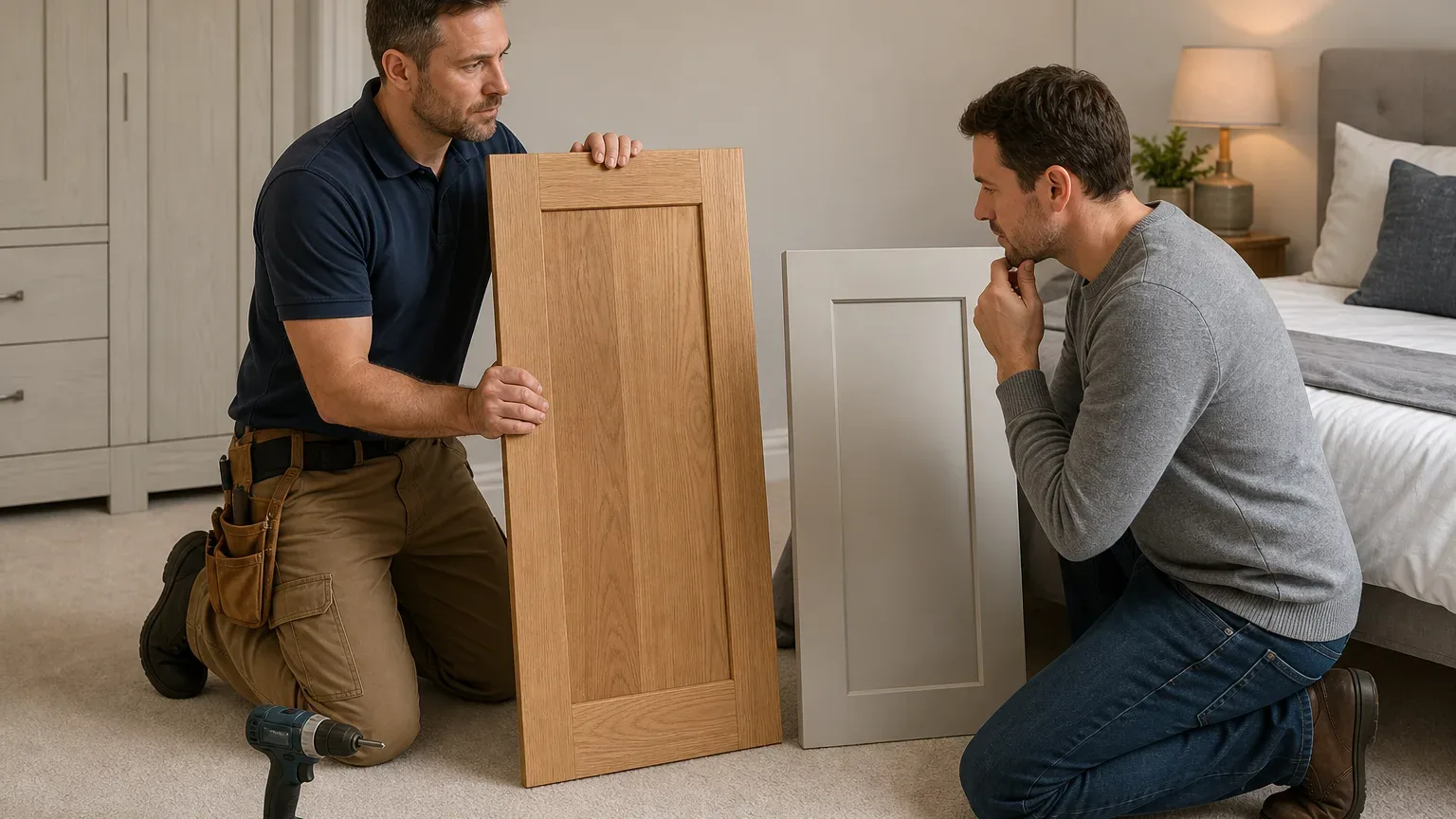
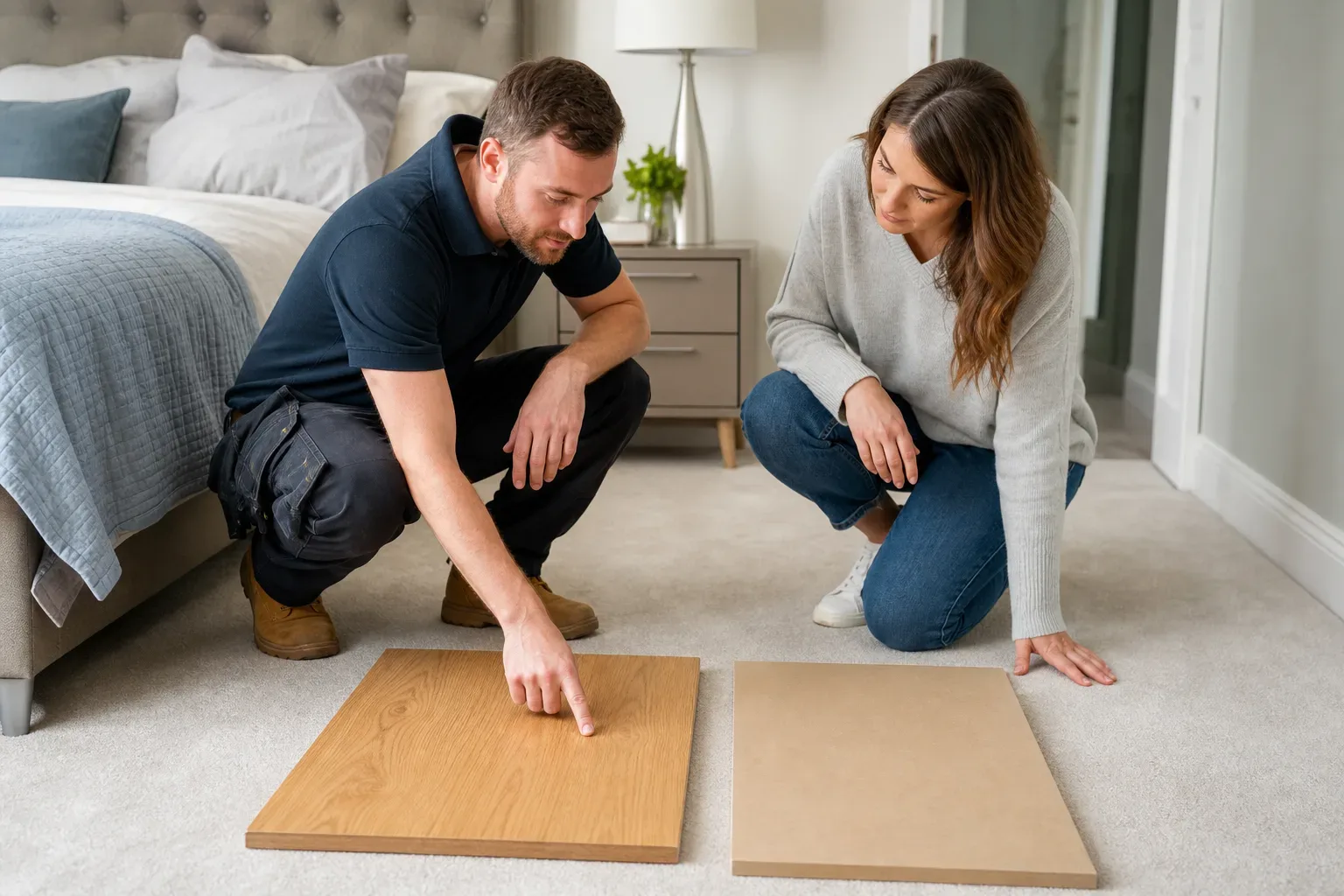
Solid wood and MDF are not interchangeable. Solid wood uses timber cut directly from the tree, typically oak, walnut, or pine, machined into panels, frames, and doors. MDF (medium-density fibreboard) is an engineered product: wood fibres compressed with resin under heat and pressure into a dense, stable sheet.
Both materials are used by fitted wardrobe specialists across East Lothian, and both can produce a high-quality result. The right choice depends on your budget, the room's conditions, and the aesthetic you want.
How Each Material Performs in a Bedroom Environment
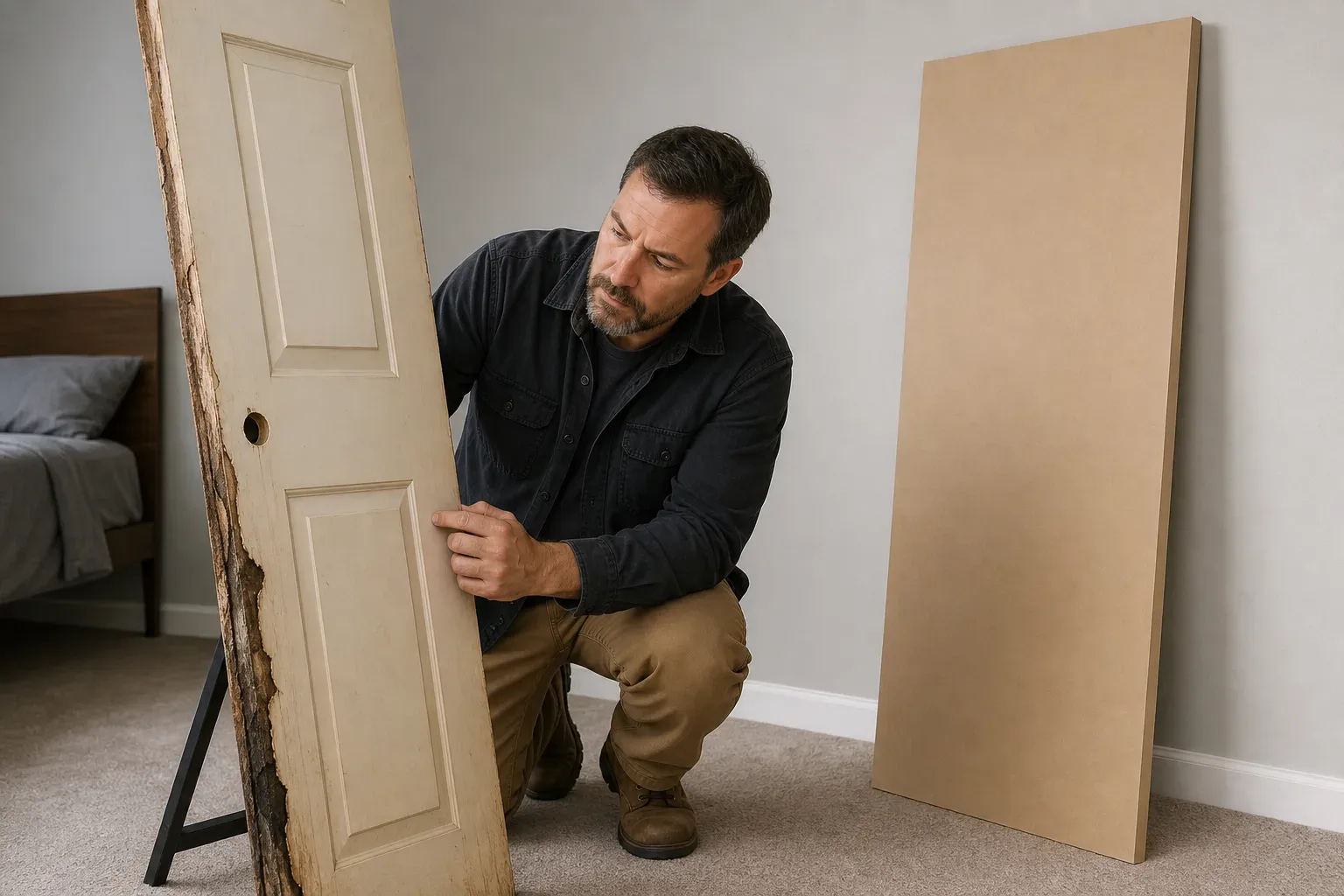
Bedrooms in East Lothian properties, whether a Victorian terrace in Musselburgh or a newer build in Dunbar, rarely maintain perfectly stable humidity year-round. Timber is hygroscopic, meaning it absorbs and releases moisture as conditions change. In a well-ventilated bedroom this movement is minor, but in a poorly insulated room it can cause solid wood panels to expand, contract, and occasionally warp or crack at joints over time.
Moisture-resistant MDF is dimensionally stable. It does not move with humidity changes the way natural timber does. That stability makes it a reliable choice for painted finishes, since paint on solid wood can crack at movement points, whereas MDF holds a painted surface cleanly for years.
Where Solid Wood Genuinely Has the Edge
Durability under physical stress is where solid wood leads. A solid oak door edge will withstand knocks, scratches, and daily wear better than an MDF door of equivalent thickness. Solid wood can also be sanded and refinished multiple times across decades, making it a genuinely long-term investment rather than a one-cycle product.
Grain, colour variation, and tactile warmth are qualities MDF cannot replicate. For homeowners who want a wardrobe that reads as a piece of furniture rather than fitted cabinetry, solid wood delivers that in a way no vinyl wrap or paint can quite match.
Cost Comparison for East Lothian Buyers
Material choice is one of the largest single factors in fitted wardrobe pricing. A fully fitted bespoke wardrobe in a standard bedroom using moisture-resistant MDF or mixed materials typically sits in the £1,500–£3,500 range. Moving to high-specification solid wood or handleless bespoke units pushes costs into the £3,500–£8,000-plus bracket, and a walk-in installation in solid wood can reach £10,000 or more depending on room size and fittings.
Labour costs are broadly similar regardless of material. Fitters in East Lothian generally charge £200–£350 per day, and a single wardrobe takes 1–2 days to install, while a full bedroom or walk-in project runs 3–5 days. The price gap between MDF and solid wood is almost entirely down to materials and manufacturing time, not installation complexity.
What Drives the Price of Solid Wood Higher
Timber grading, drying, and machining take longer than manufacturing MDF sheet goods. Prime-grade oak or walnut is also significantly more expensive per cubic metre than MDF board. Solid wood doors require more precise joinery, particularly for frame-and-panel construction that accommodates movement without cracking.
For buyers with a fixed budget closer to the mid-range, a practical compromise is a carcass built from moisture-resistant MDF with solid wood or real-wood-veneer doors. This approach captures much of the visual warmth of timber at a lower overall cost.
Appearance and Finish Options
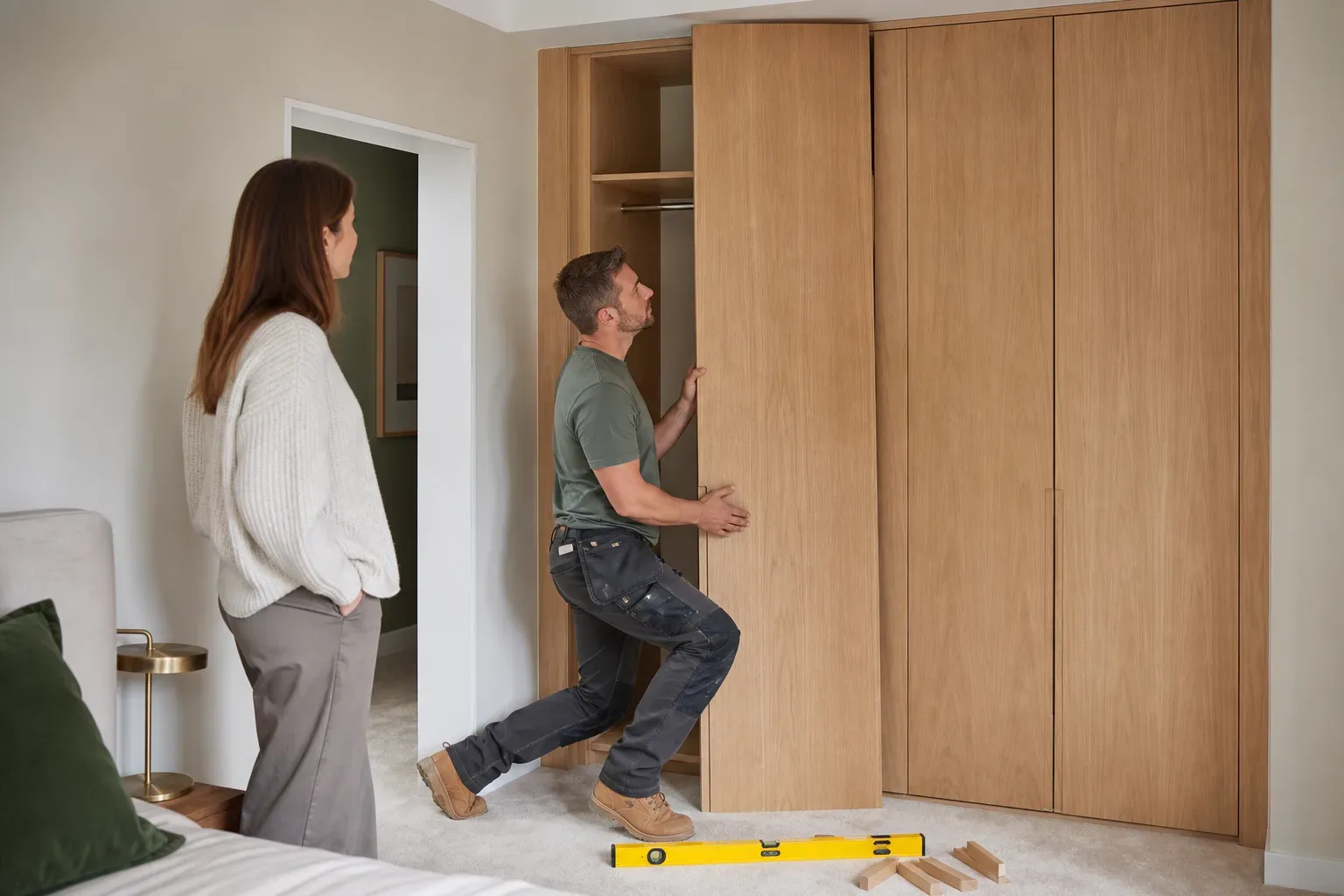
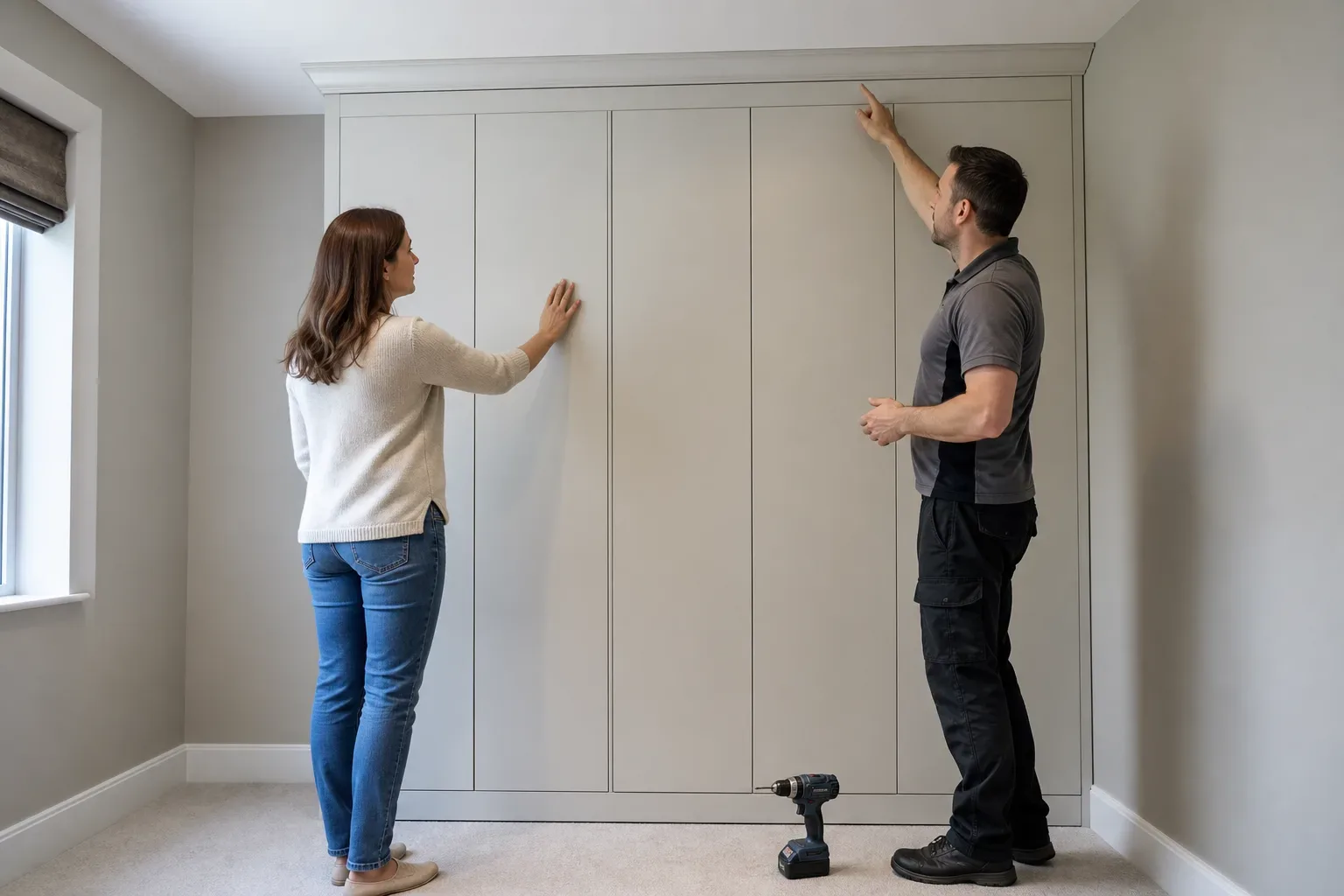
MDF accepts paint exceptionally well, producing a smooth, uniform surface that suits contemporary handleless designs popular in new-build homes around Tranent and North Berwick. It can also be wrapped in vinyl or lacquered for a sheen finish. The limitation is that every door in a run will look identical, because MDF has no natural grain.
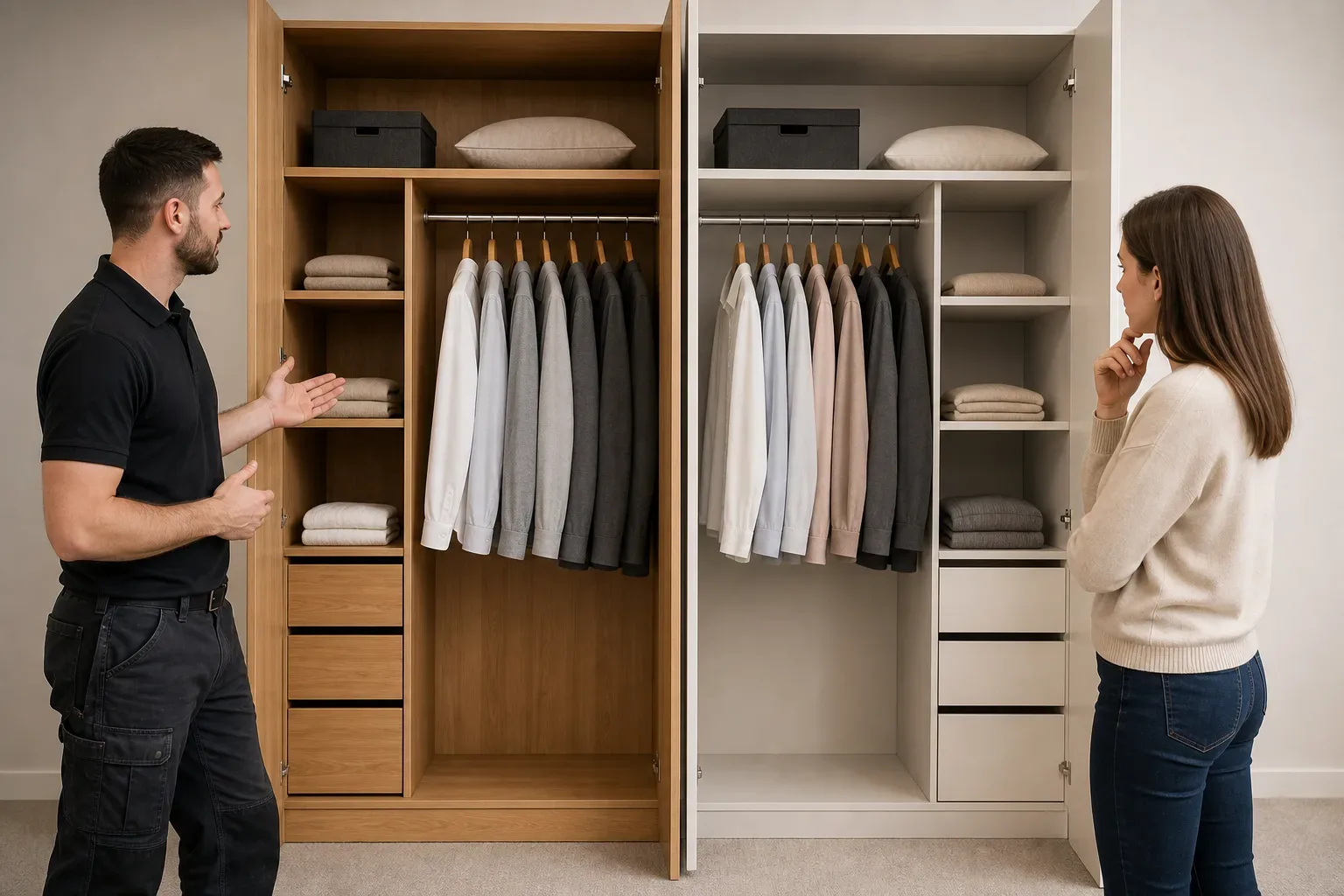
Solid wood introduces natural variation. Two adjacent oak doors will not match perfectly, which is considered a feature in a traditional or Shaker-style design but can feel inconsistent in a minimal contemporary interior. Veneered MDF offers a middle path: real wood grain applied to a stable MDF substrate, giving a natural appearance without the movement risk of through-and-through timber.
Painted Finishes vs Natural Wood
Painted fitted wardrobes are the dominant choice in East Lothian properties where the brief is to make storage blend with the room rather than stand out. MDF is the better substrate for this. For a natural wood finish, solid timber or a quality veneer over MDF both work well, though solid timber will deepen and shift in colour over years in a way veneer cannot replicate at the same depth.
Longevity and Maintenance
A well-built MDF wardrobe fitted with quality hardware will last 15–25 years under normal domestic use. Solid wood, properly finished and maintained, can outlast the house's interior decoration cycle multiple times, remaining structurally sound for 30 years or more. The key word is maintained: solid wood benefits from occasional re-oiling or re-waxing on natural finishes, and from attention to humidity in the room.
Both materials are covered under the 5-year workmanship guarantee offered by reputable fitters, which protects against installation defects rather than material wear. Accreditation through a recognised joinery or furniture trade association is a useful indicator that a company works to a consistent standard.
Which Material Is Right for Your Project
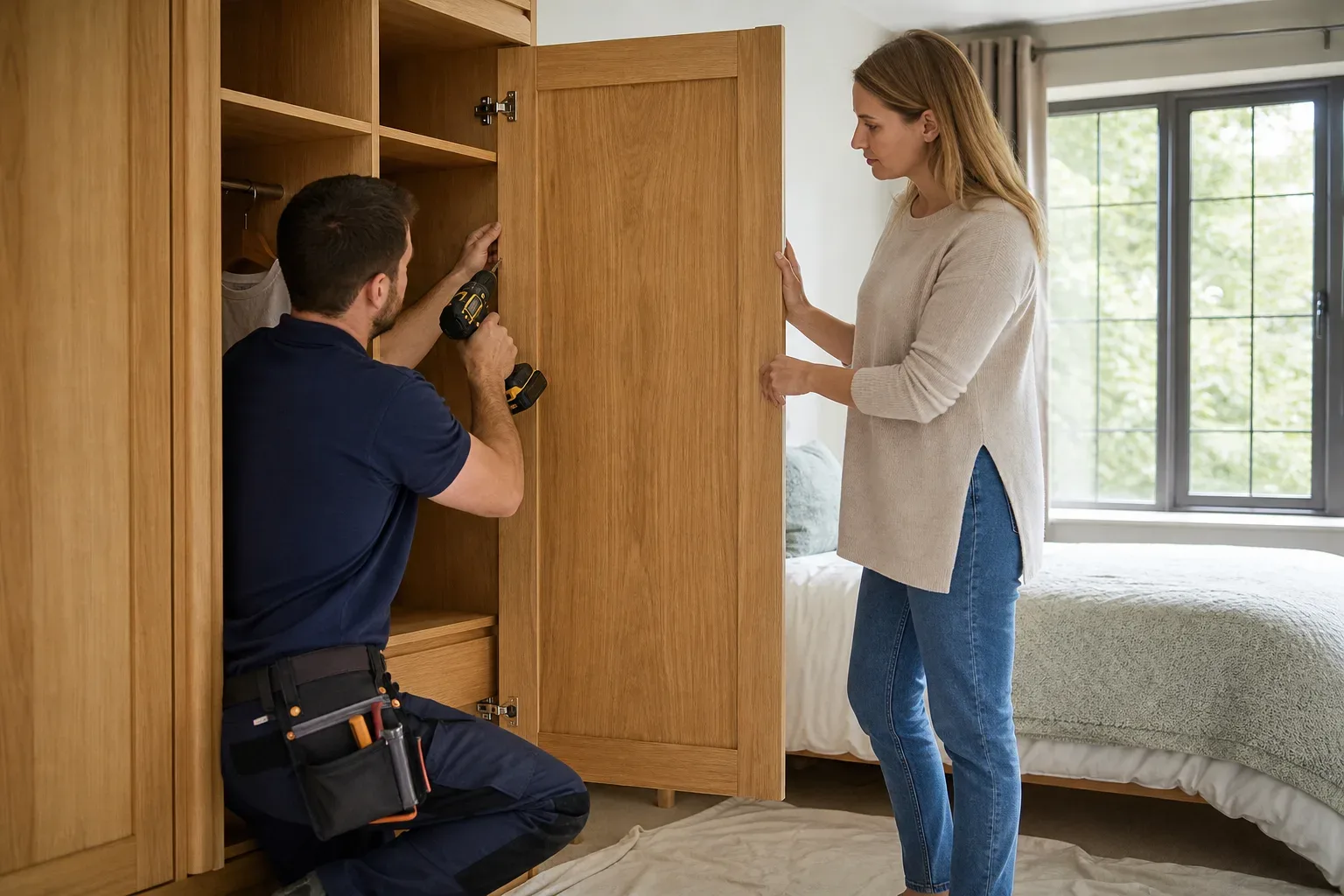
For most East Lothian buyers comparing solid wood vs MDF fitted wardrobes, MDF is the more practical default, particularly for painted wardrobes in standard bedrooms. It is stable, cost-effective, and capable of a very high-quality finish. Solid wood makes sense when the design calls for a natural grain, when longevity across decades is a priority, or when the wardrobe is intended to be a defining feature of the room.
A free no-obligation home survey, typically arranged within 5–7 working days of enquiry and completed 4–8 weeks before installation, is the right point to make this decision with a fitter who can assess the room's conditions and your brief together.
Frequently Asked Questions
What Are Solid Wood Fitted Wardrobes?
Solid wood fitted wardrobes are built-in storage units constructed from timber cut and machined directly from the tree, such as oak, walnut, or pine. Unlike MDF, solid wood has a natural grain, handles physical wear well, and can be refinished multiple times over its lifespan. In East Lothian homes they are typically specified for traditional, Shaker, or high-specification bespoke designs where a natural appearance and long-term durability are priorities.
Is MDF or Solid Wood Better for Fitted Wardrobes?
For most standard bedrooms, moisture-resistant MDF is the more practical choice. It is dimensionally stable, accepts painted finishes cleanly, and costs less than solid wood. Solid wood is better suited to natural-grain designs, high-end bespoke projects, or situations where the wardrobe needs to last several decades with periodic refinishing. A veneered MDF door offers a middle option: real wood grain on a stable substrate.
How Much Do Solid Wood Fitted Wardrobes Cost in East Lothian?
High-specification solid wood fitted wardrobes typically fall in the £3,500–£8,000-plus range for a standard bedroom installation in East Lothian. Walk-in configurations in solid wood can reach £10,000 or more depending on room size and fittings. Mid-range MDF wardrobes run £1,500–£3,500, so the premium for solid wood is significant. Labour rates of £200–£350 per day are broadly the same for both materials.
Does MDF Warp or Swell in a Bedroom?
Moisture-resistant MDF is designed to remain dimensionally stable under normal domestic humidity levels, and it performs better than solid wood in rooms where temperature and moisture fluctuate. It is not waterproof, so sustained exposure to damp, such as in a poorly ventilated room, can cause swelling at edges and cut surfaces over time. Using moisture-resistant grade board and ensuring the room has adequate ventilation prevents this in the vast majority of East Lothian bedrooms.
How Long Do Fitted Wardrobes Last?
A well-built MDF fitted wardrobe typically lasts 15–25 years under normal domestic use. Solid wood wardrobes, properly finished and maintained, can remain structurally sound for 30 years or more. Both are usually covered by a 5-year workmanship guarantee from reputable East Lothian fitters, which protects against installation defects. Hardware quality, particularly hinges and drawer runners, often determines how long a wardrobe stays fully functional regardless of the carcass material.