Soft-Close and Smart Mechanisms for Fitted Wardrobes in East Lothian
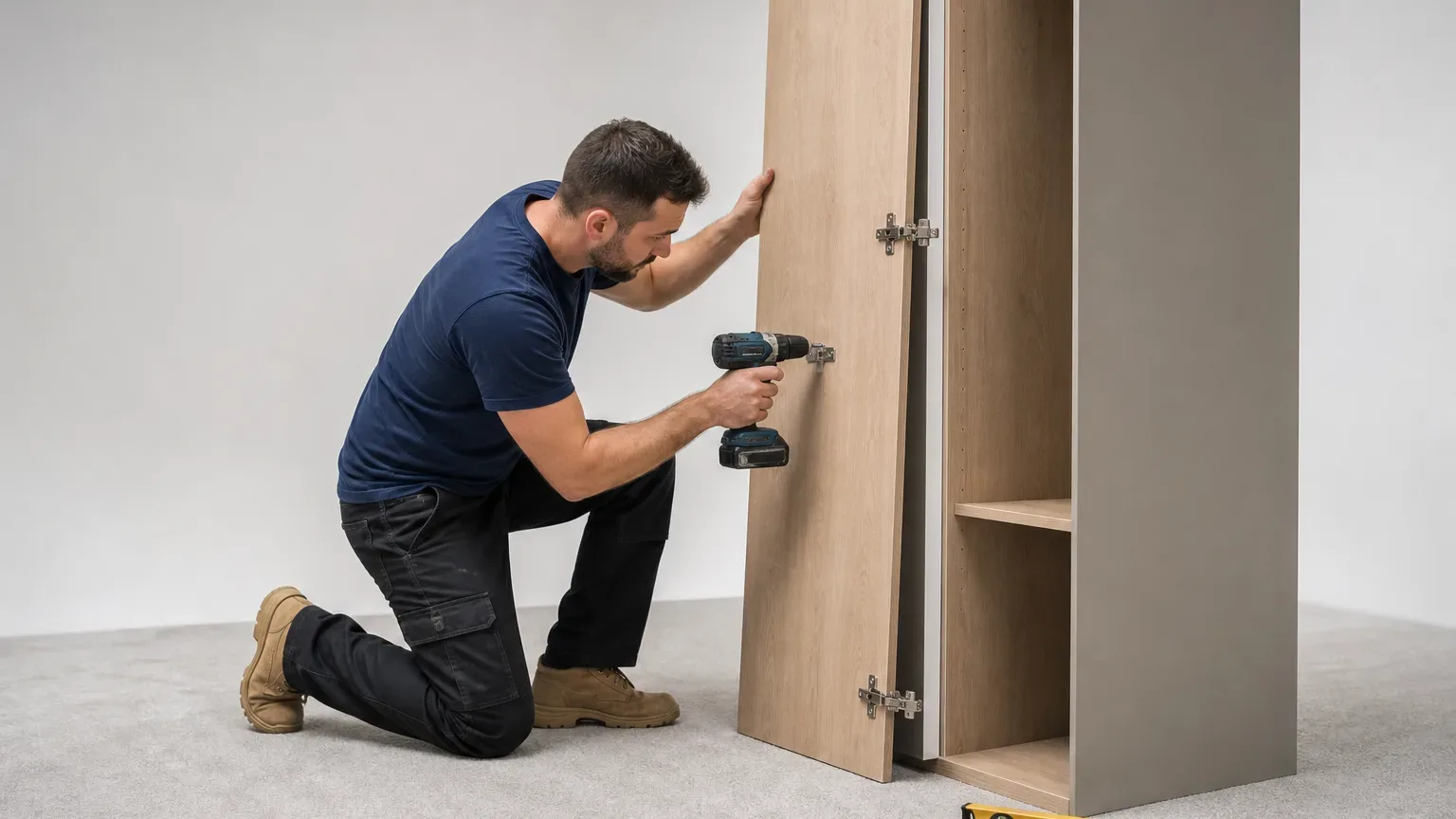
The difference between a fitted wardrobe that feels premium and one that merely functions often comes down to the mechanisms inside it. Soft-close hinges, dampened runners, and integrated storage fittings are small components that dramatically change the daily experience of using a wardrobe. For homeowners in East Lothian commissioning bespoke or fully fitted units, understanding these choices before the build begins avoids costly retrofitting later.
What Soft-Close Mechanisms Actually Do
Soft-close hardware uses a hydraulic or spring-loaded damper to slow a door or drawer during the final 10–15 degrees of travel, preventing it from slamming. The result is a quiet, controlled close every time, regardless of how firmly the door is pushed. Hinges with integrated soft-close cartridges are standard on quality swing-door wardrobes, while sliding door systems use a separate bottom or top-track brake that catches the panel before it hits the frame.
The practical benefit extends beyond noise. Repeated hard closing stresses the door panel, the frame joint, and the hinge screw holes over time. Soft-close mechanisms reduce that cumulative impact, which matters particularly in MDF-framed wardrobes where hinge pull-out is a known long-term failure point.
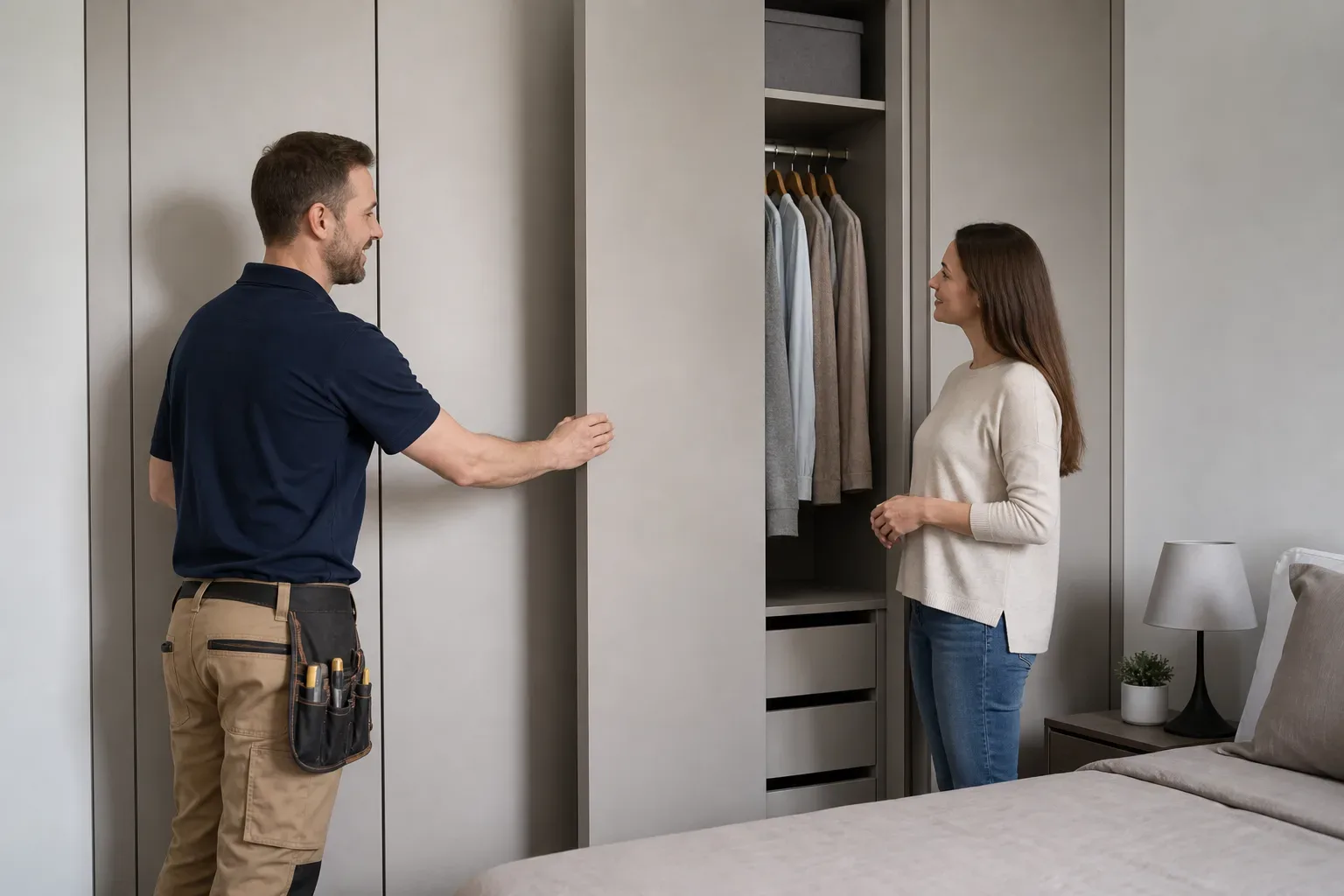
Swing Doors vs Sliding Doors - Which Benefits More?
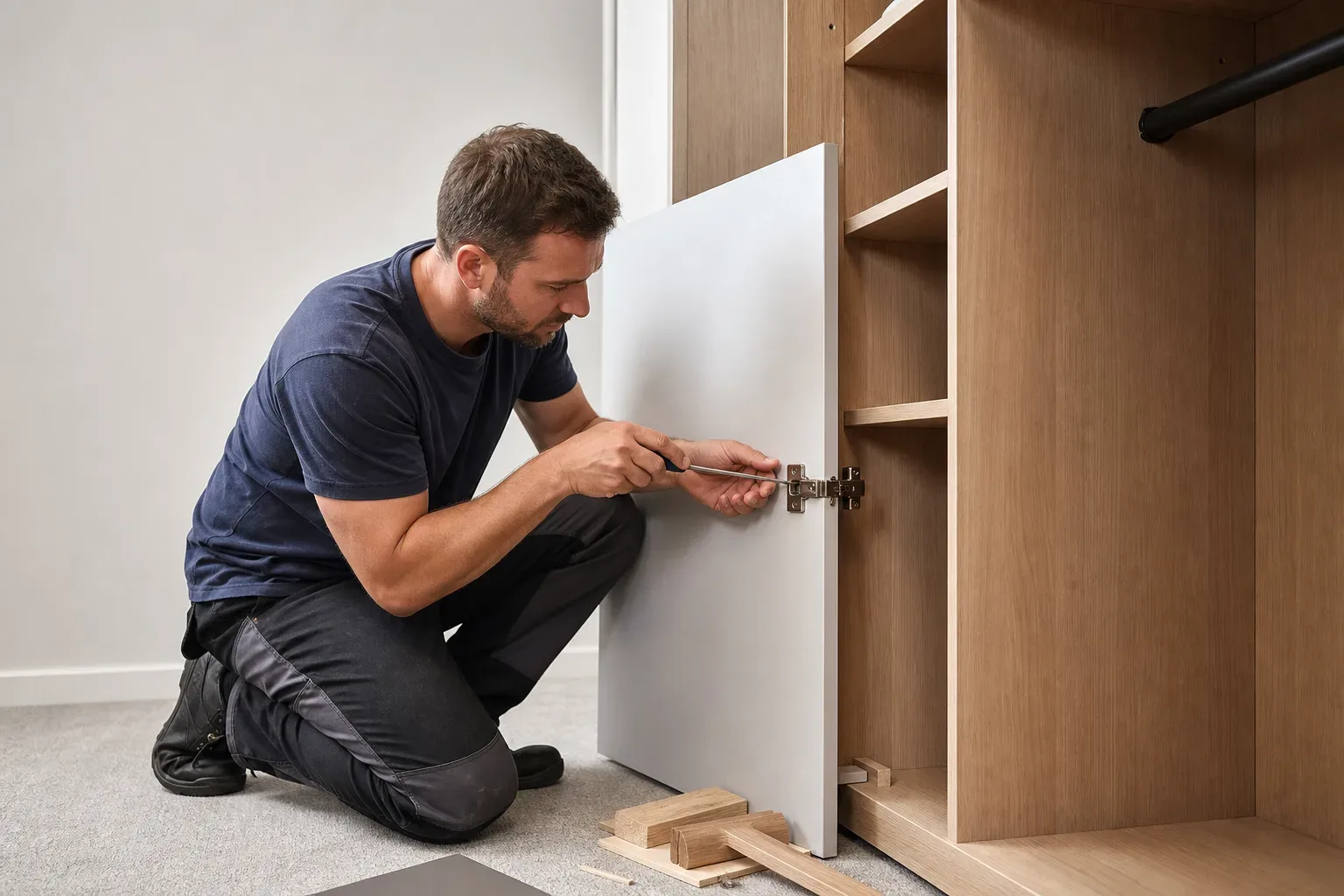
Both door types benefit from soft-close hardware, but the mechanism differs substantially between them. Swing doors use a concealed hinge with a built-in damper, usually adjustable for door weight and closing speed. These are well-established components available in 35 mm cup sizes compatible with virtually all frameless carcass builds.
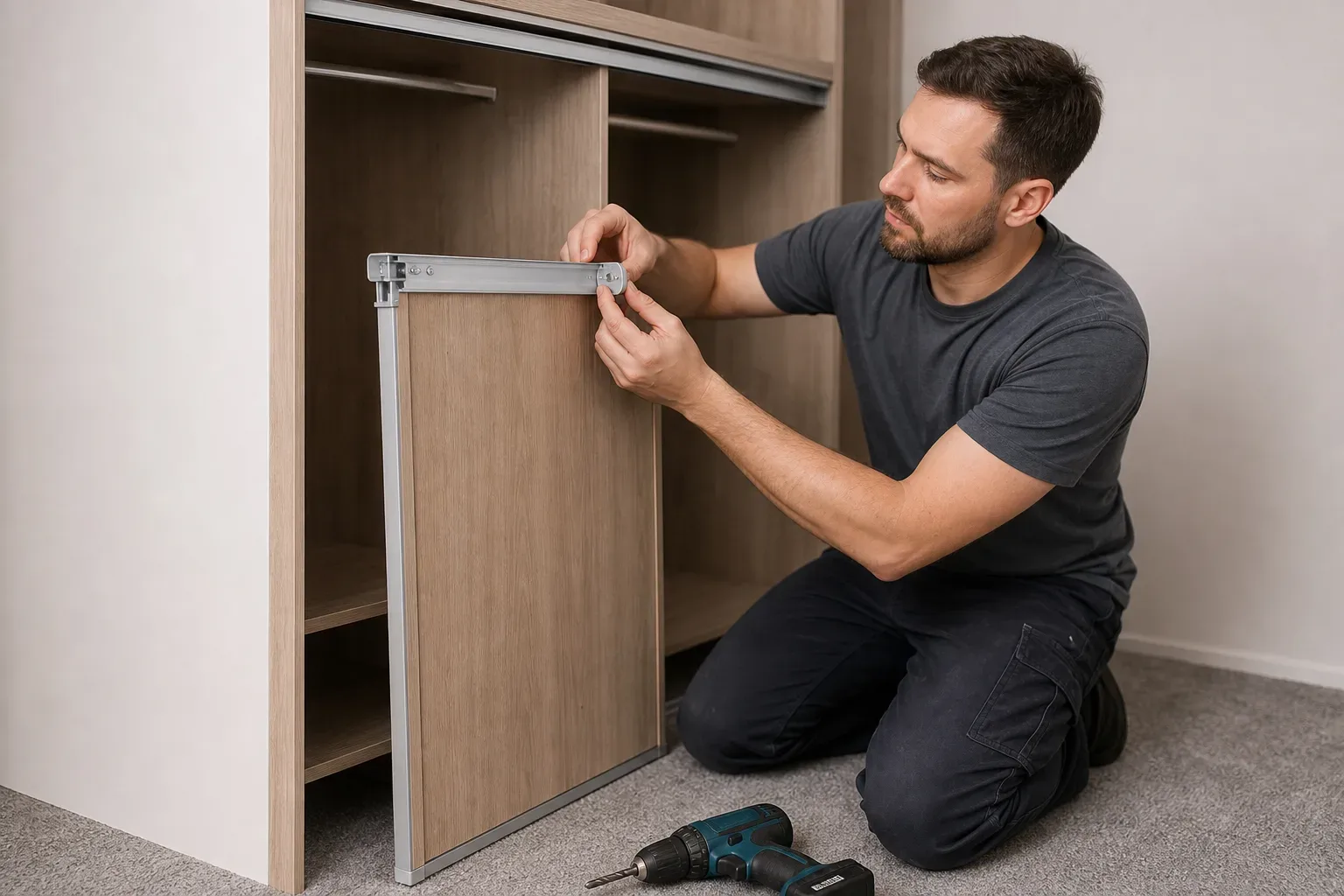
Sliding door fitted wardrobes use a top or bottom running system with a separate soft-close brake integrated into the track or end cap. The brake engages when the panel is within roughly 50 mm of the closed position. Heavier panels, common in floor-to-ceiling mirror wardrobes, require a higher-rated brake rated for that panel weight. Specifying the wrong brake at build stage is a common oversight that leads to a weak catch or no catch at all.
Adjustability and Long-Term Use
Good-quality concealed hinges offer three-axis adjustment: height, depth, and lateral position. This matters because timber frames and MDF carcasses move slightly with seasonal humidity changes, and a hinge that cannot be adjusted will gradually go out of alignment. East Lothian properties, particularly older stone-built homes in Haddington and North Berwick, can experience noticeable humidity variation between summer and winter. Specifying adjustable, high-cycle-rated hinges at the outset protects the investment over years of use.
Smart Storage Fittings Worth Considering
Mechanism upgrades are not limited to doors. Internal fittings, pull-out systems, and lighting all contribute to how functional a fitted wardrobe feels in daily use.
Pull-Out Trouser Racks and Valet Rods
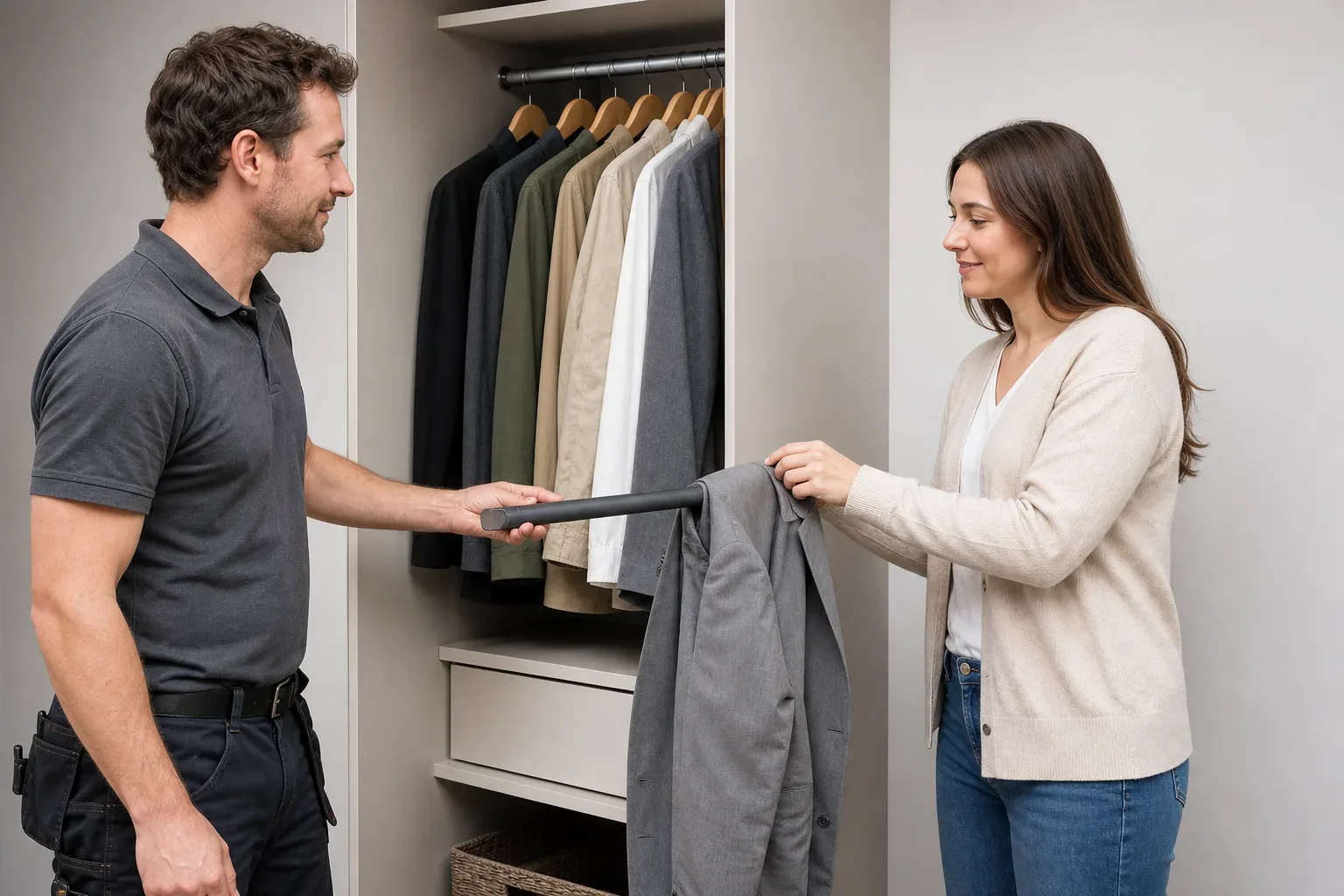
Pull-out trouser racks extend on steel runners and fold flat when not in use, making full use of otherwise dead space beside a hanging section. Valet rods are short extendable rails that pull forward from the carcass side panel, providing a temporary hanging point for laying out an outfit. Both are low-cost additions at supply level and make a meaningful difference in wardrobes where hanging space is at a premium, such as alcove wardrobes fitted into chimney-breast recesses.
Soft-Close Drawer Systems
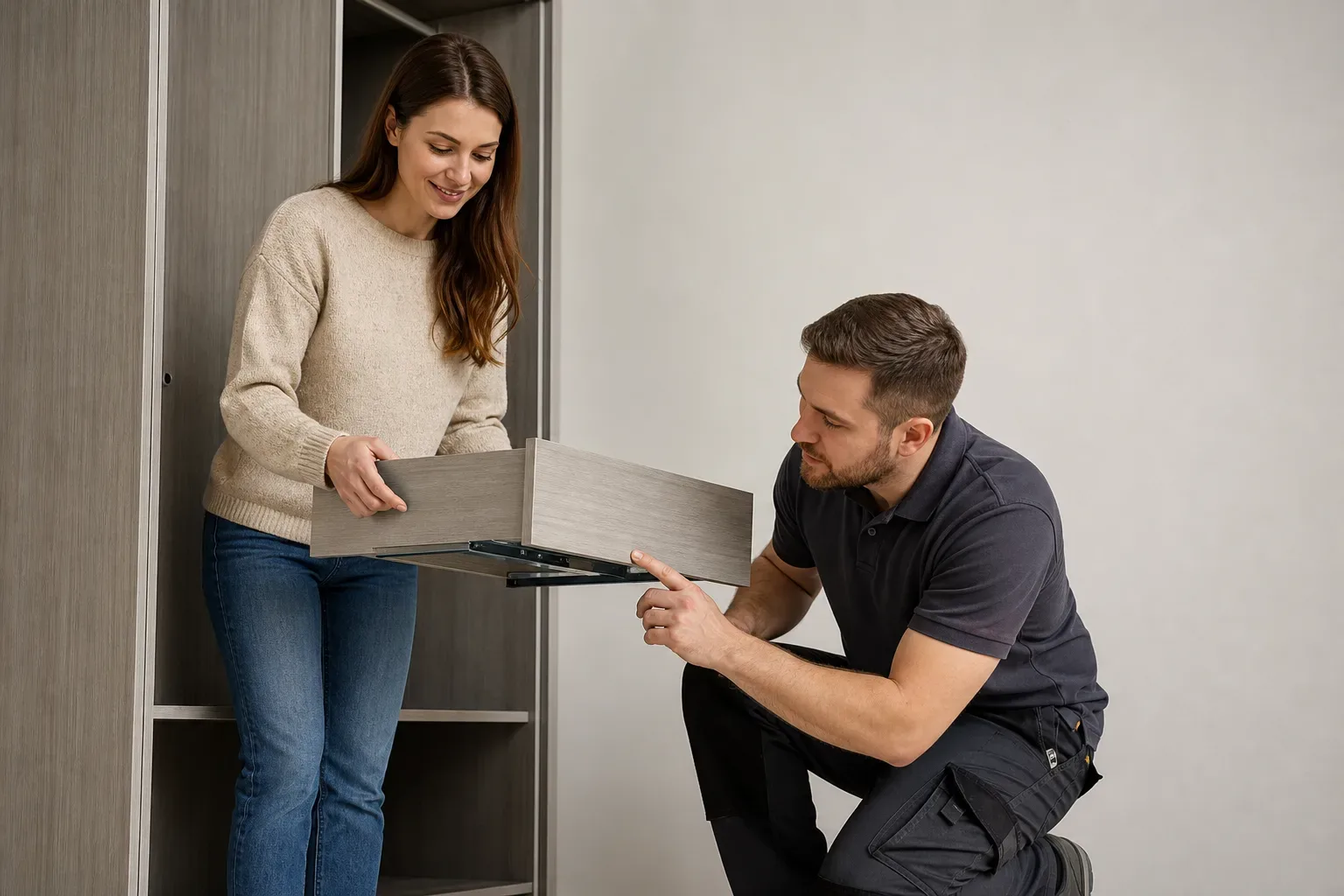
Drawer boxes with soft-close undermount runners are among the most noticeable upgrades in a fitted wardrobe. Full-extension runners allow the drawer to open completely, exposing the full internal depth. Push-to-open or touch-latch systems remove the need for handles entirely, which suits handleless bespoke designs popular in contemporary East Lothian interiors. Specifying a runner rated to at least 30 kg per drawer is sensible for deep, wide drawer boxes that will carry heavy knitwear or accessories.
Integrated LED Lighting
Motion-activated LED strip lighting inside a wardrobe is a practical rather than purely decorative addition. Lights that trigger on door open and extinguish on door close remove the need for separate switching. Warm-white strips at 2,700–3,000 K render clothing colours more accurately than cool daylight temperatures, which is useful when selecting outfits in early morning or evening light. Battery-operated stick-on systems are available, but hardwired low-voltage systems installed during the build are more reliable and avoid battery maintenance.
How These Upgrades Affect Overall Project Cost
Fitted wardrobe projects in East Lothian range from £800–£1,500 for entry-level supply-and-fit work up to £3,500–£8,000 or more for high-specification solid wood or handleless bespoke installations. Mechanism upgrades sit within the overall build cost rather than as separate line items in most bespoke quotes. A competent fitter will specify quality hinges, runners, and internal fittings as standard in the mid-range bracket of £1,500–£3,500, with premium hardware reserved for the upper tier.
The important question to ask any installer is what hinge brand and cycle rating they use as standard, and whether soft-close is included or priced as an optional extra. Reputable fitted wardrobe specialists in East Lothian will specify this clearly in their written quote. If a quote is silent on hardware specification, it is reasonable to ask before signing.
Finding the Right Installer in East Lothian
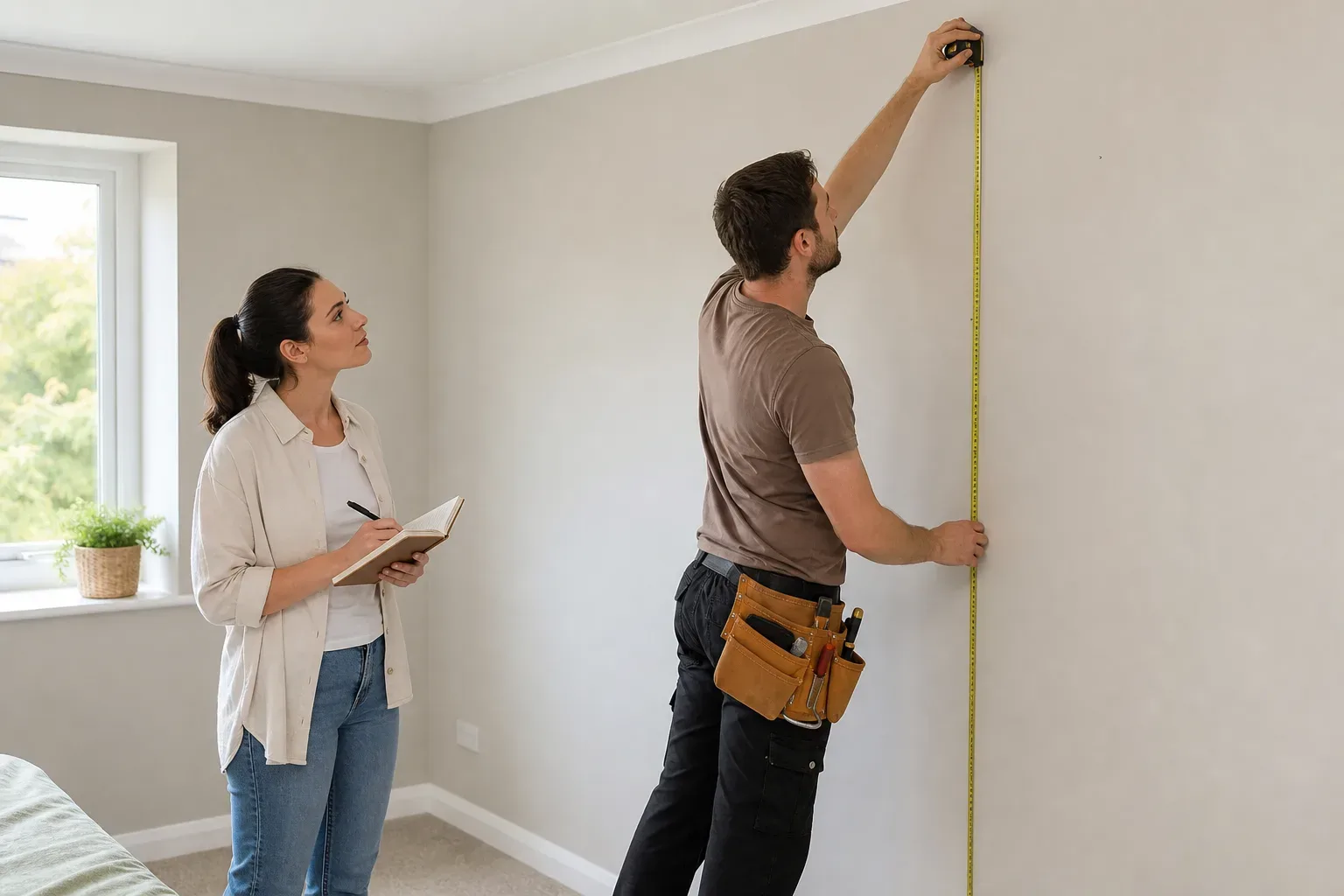
A free no-obligation home survey is the standard starting point for any bespoke fitted wardrobe project. During a survey visit, a specialist can assess the specific room, identify any structural considerations such as sloping ceilings or uneven floors, and advise on which mechanisms are appropriate for the door size and weight proposed. Survey appointments are typically available within 5–7 working days of enquiry, with installation dates following 4–8 weeks after a confirmed quote.
Installers covering the East Lothian area serve towns including Haddington, Musselburgh, North Berwick, Dunbar, Tranent and surrounding villages. A 5-year workmanship guarantee provides assurance that any mechanism failure or alignment issue arising from the installation itself will be addressed without additional charge. Membership of a recognised joinery or furniture trade association adds a further layer of accountability when comparing quotes.
Questions to Ask Before Specifying Mechanisms
Going into a design consultation with specific questions produces a more useful outcome than leaving all decisions to the installer. Ask what hinge make and cycle rating is standard, whether drawer runners are full-extension, what brake rating is used on sliding door fitted wardrobes, and whether soft-close is included across all moving parts or priced separately. Ask also whether the lighting system, if included, is hardwired or battery-operated.
The answers reveal the quality tier of the proposal and allow like-for-like comparison between multiple quotes. Mechanism specification is one area where a lower headline price can conceal significant differences in component quality that only become visible after two or three years of daily use.
Frequently Asked Questions
Are Soft-close Hinges Included as Standard in Bespoke Fitted Wardrobes?
It depends on the installer. Quality fitted wardrobe specialists in East Lothian typically include soft-close hinges and drawer runners as standard in mid-range and premium builds, but entry-level quotes may list them as optional extras. Always check the written specification before confirming an order.
Do Soft-close Mechanisms Work on Heavy Mirror Sliding Doors?
Yes, but the brake unit must be rated for the panel weight. Heavier mirror panels require a higher-capacity soft-close brake integrated into the sliding track. Specifying an undersized brake results in a weak or non-existent catch, so panel weight should be confirmed with your installer at the design stage.
How Long Does Installation of a Fitted Wardrobe with Premium Mechanisms Take?
A standard single fitted wardrobe typically takes 1–2 days to install. Larger projects such as full-bedroom or walk-in wardrobe builds, where more mechanisms and internal fittings are involved, generally take 3–5 days including finishing work.
Can Soft-close Fittings Be Added to an Existing Fitted Wardrobe?
In many cases, yes. Concealed hinges can be swapped for soft-close versions if the cup size matches the existing hinge bore, which is usually 35 mm on modern carcasses. Sliding door brake upgrades are also possible if the track system is a standard profile. A specialist can assess compatibility during a site visit.
What Is the Typical Lead Time for a Bespoke Fitted Wardrobe Installation in East Lothian?
From the initial enquiry to a completed installation, expect roughly 4–8 weeks. A home survey is usually arranged within 5–7 working days of first contact, followed by design, manufacture, and scheduling of the installation date.